research
CT eighth highest in unaffordable rents, impacts health
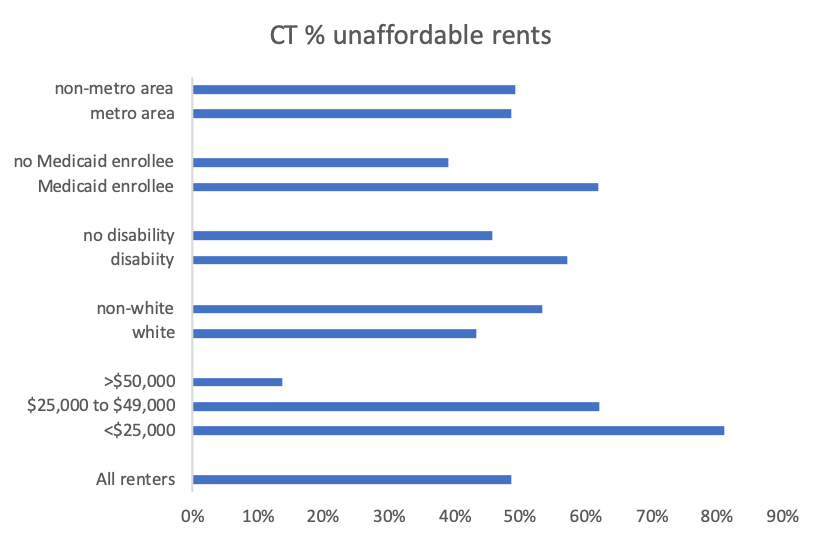
In 2017 almost half (48.5%) of renters in Connecticut spend over 30% of their household income on rent, more than renters in all but seven other states. The analysis by SHADAC found that Connecticut has been in the top ten states for most unaffordable rents in five of the last six years and the rate…
Read MorePCMH + risk scores suggest possible gaming or worse; Advocates call on DSS to delay expansion to protect members and taxpayers

A new analysis of PCMH + members’ risk scores finds unexplained increases compared to the control/comparison group that could signal ACO gaming of the system for financial gain and/or, far worse, a decline in the health of members in the program. PCMH Plus, a controversial new payment model, allows ACO (large health systems) to share…
Read MoreCoincidence? CT spends little on primary care, and we have high ED, preventable hospitalization rates

A new analysis finds that Connecticut, at only 3.5% of our health care dollars spent on primary care, is last among 29 states studied. Not surprisingly, we also rank among the highest in ED visits, all hospitalizations, and in avoidable hospitalizations. The US average is 5.6% of health care spending devoted to primary care, well…
Read MoreLarge study finds selection bias in Medicare shared savings erases savings and quality improvements – advocates saw this coming

Researchers from the University of Michigan found that the modest savings and quality improvements reported by Medicare’s extensive shared savings program (MSSP) are likely due to adverse selection. High cost clinicians and beneficiaries were far more likely than others to exit the program. When adjusted for the selective bias in MSSP exit, reported savings and…
Read MoreFor the Book Club — Range: Why Generalists Triumph in a Specialized World

If you’ve sat next to me in a meeting this month, you probably already know I’m reading this book. I can’t stop talking about it. The author debunks the common myth that specialization is the key to success using detailed evidence explained so anyone can understand. The experts’ consensus is that you need to devote…
Read MoreFor the Book Club — The Truth Matters: A Citizen’s Guide to Separating Facts from Lies and Stopping Fake News in its Tracks

As we get more and more information from new, untested sources, untrustworthy sources and fake news grow, undermining trust in media and politics. This short book offers real-world tips and resources to counter the trend. Chapters include how to read critically, using fact-checking sites, finding trustworthy sources and experts (and how to spot the fakers),…
Read MoreAdvocates offer recommendations for Medicaid shared savings future

The first year of Connecticut Medicaid’s PCMH Plus experiment in shared savings was disappointing. The program cost the state at least $1.3 million extra tax dollars and quality did not improve compared to Medicaid members outside the program. Every Accountable Care Organization (ACO), regardless of savings or quality improvement, was rewarded with a payment. The…
Read MoreComment open on leading healthcare value pricing methodology
The Institute for Clinical and Economic Review (ICER) is seeking public input on their methodology to their development of benchmark prices for tests, treatments, drugs and innovations based on their value. ICER, an independent non-profit research institute, is the key source for value-based assessments. Their reports are used by the VA, Medicare, Medicaid, commercial plans…
Read MoreFor the Book Club: The Tyranny of Metrics

As the world moves toward data and analytics to evaluate progress (and it should), we need to be careful that the movement is meaningful. This must-read is full of cautionary tales, including a chapter on medicine, of mis-use of metrics to evaluate performance that ended up doing more harm than good and box-checking in place…
Read MoreMedicaid update: Quality improving but lots of work to do

Friday’s Medicaid Council meeting focused on quality performance in the program. The good news – ED visits and readmissions continue dropping across the program, although community health centers’ performance remains a problem Well-child visit and lead screening rates are higher than the national average Routine care is increasing and inpatient care is decreasing The bad…
Read More