
Budget Process
Risk to CT hospitals from Medicaid cuts varies significantly
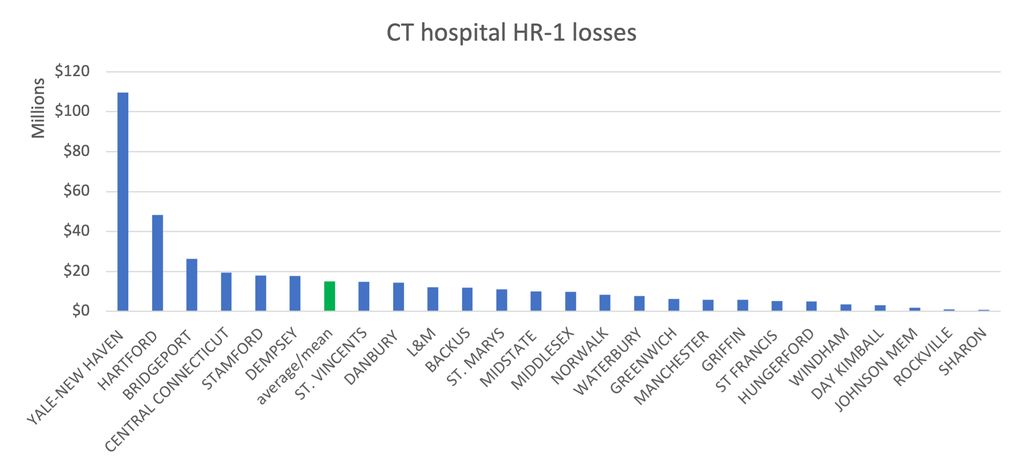
The federal budget bill, HR-1, will cause significant cuts across Connecticut’s healthcare landscape. Much of the cuts will fall on hospitals, but the burden will not be shared equally. A new analysis by Third Way estimates that statewide, Connecticut hospitals will lose $378 million annually over the next ten years due to federal Medicaid cuts.…
Read MoreCTNJ: CT needs to prepare for impending surge in uninsured care
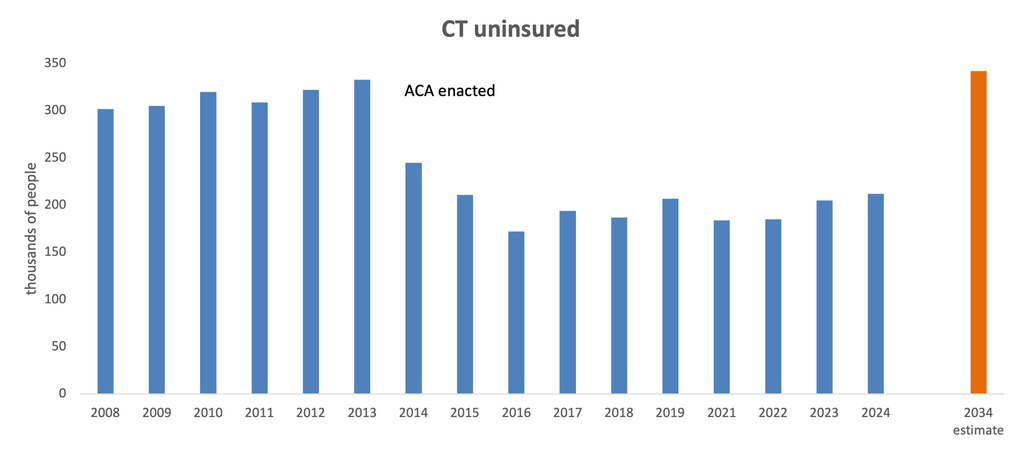
Next year, we may look back fondly on the uninsured numbers released Tuesday estimating 26.7 million Americans were uninsured last year. Like the rest of the US, Connecticut’s uninsured rate fell significantly a decade ag, making it old news. Other healthcare issues have taken over the spotlight. But federal budget cuts will soon put the…
Read MoreBook Club — Pre-Existing Conditions: How Lobbying Makes American Health Care More Expensive

If you’re still looking for a summer read, Pre-Existing Conditions, by Alex Garlick, is a good choice. This is the first deep dive I’ve found into the impact of state-based lobbying on healthcare costs. Most descriptions of healthcare policy, including the influence of lobbying, only looks at the federal level. Most important health policy happens…
Read MoreAnalysis: Questions missing in the Lamont-Elliot debate

In Wednesday’s debate, the only one we’ll get, between Connecticut’s Democratic candidates for Governor, there were no questions about healthcare. None. Affordability is a top priority for voters, and the staggering cost of healthcare is a big part of their anxiety. These are some questions I would’ve asked, and I’ll even give the candidates my…
Read MoreCT Medicaid Home & Community Services spending up, but that’s what we want

Read the report Recently, Connecticut Medicaid per member costs have grown significantly while enrollment is easing, according to the latest state financial report. Since switching from managed care organizations in 2012 to focus on care management, Connecticut Medicaid spending had stabilized while enrollment expanded significantly. With COVID, enrollment grew and per member costs dropped. Post-COVID…
Read MoreFact Check: No correlation between CT hospital Medicaid share and profits

Download the data Connecticut hospitals have asserted that state Medicaid payment rates undermine hospital margins and force higher private plan rates. But the evidence doesn’t support the first assertion and is mixed on the second. As in most states, Connecticut Medicaid hospital payment rates are lower than rates that commercial plans pay. It’s important to…
Read MoreNew tool finds CT employer health insurance costs 8th highest in US
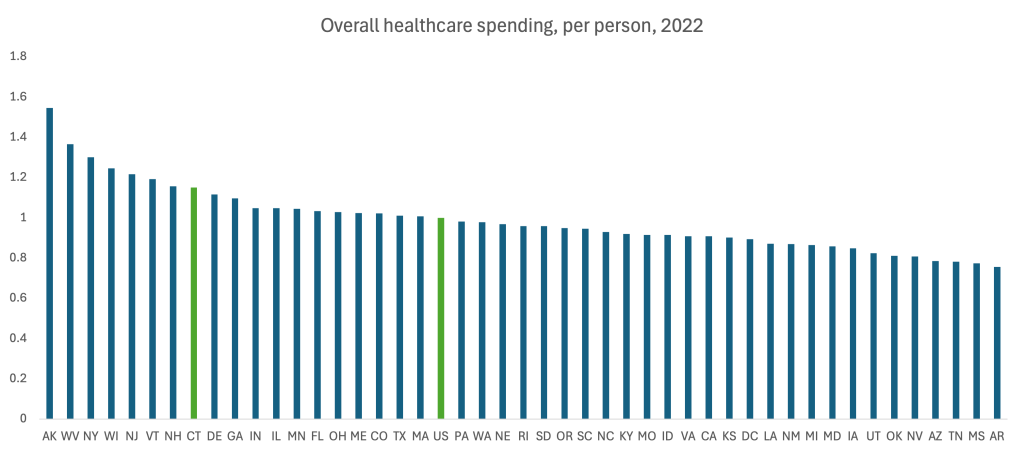
A new Health Cost Landscape data tool finds that Connecticut residents spend 15% more than the national average on employer-sponsored health insurance coverage. Only seven states cost more. But because of higher average incomes, the burden of healthcare costs is lower here than for most Americans. High prices are the main force driving up Connecticut…
Read MoreAnalysis finds CT hospitals more efficient than most in US

A new study from the Lown Institute finds all but two Connecticut hospitals are more efficient than the median US hospital within 30 or 90 days after admission. However, no Connecticut hospitals are in the top 10 most efficient in the nation and there is significant variation between Connecticut hospitals. Greenwich and Bridgeport Hospitals are…
Read MoreCT Medicaid admin costs are 5th lowest in the nation, but CT fully insured plans are the 5th highest
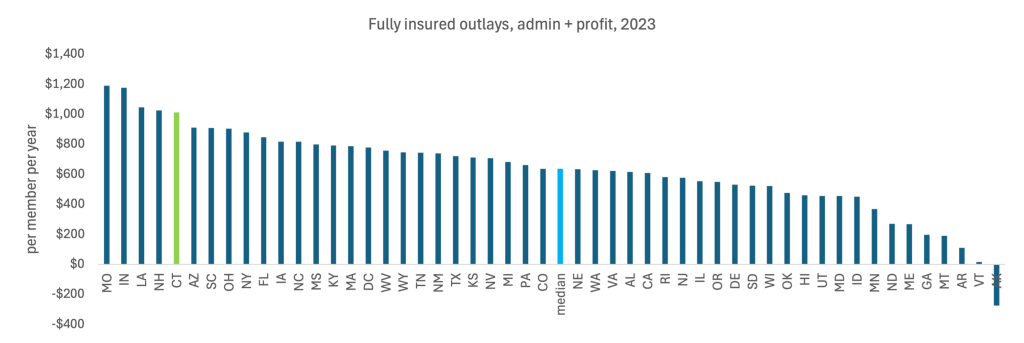
Connecticut Medicaid spent $467 less per person in 2023 on administration and corporate profit than most states, according to a new study published in Health Affairs. However, state residents in fully-insured health plans spent $412 more for administration and profit than most Americans, according to the authors from Brown University. In fully insured plans, the…
Read MoreReference pricing lowers healthcare prices, could save CT millions

Download the backgrounder Hospital prices are driving up healthcare costs making coverage unaffordable, in Connecticut and across the US. It’s hard to reduce hospital prices, especially in consolidated markets like Connecticut’s, where huge health systems have monopoly power to demand steep prices. But Oregon and Montana have been saving millions annually on just their state…
Read More