
CT Medicaid admin costs are 5th lowest in the nation, but CT fully insured plans are the 5th highest

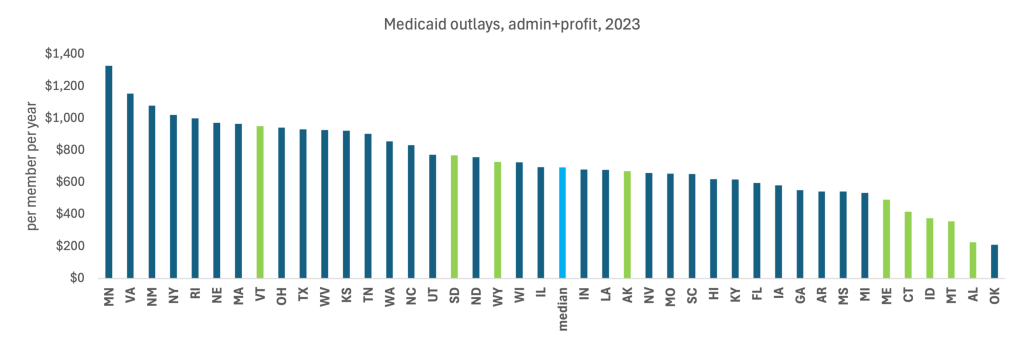
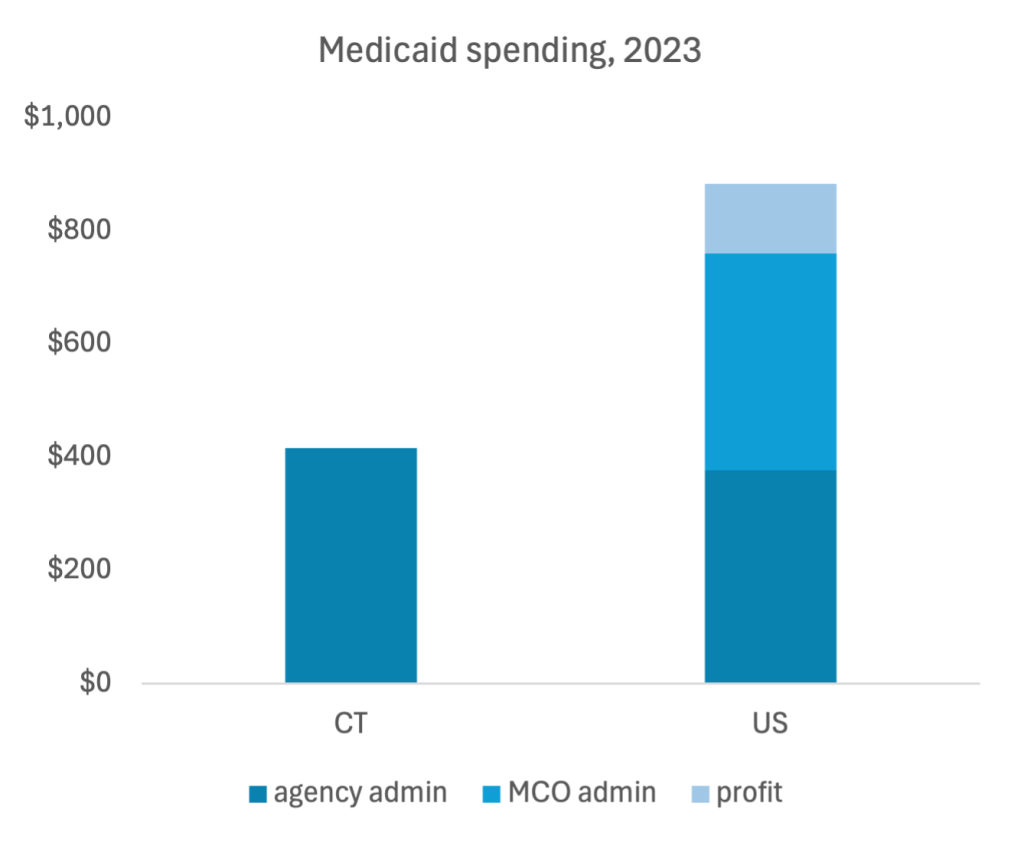
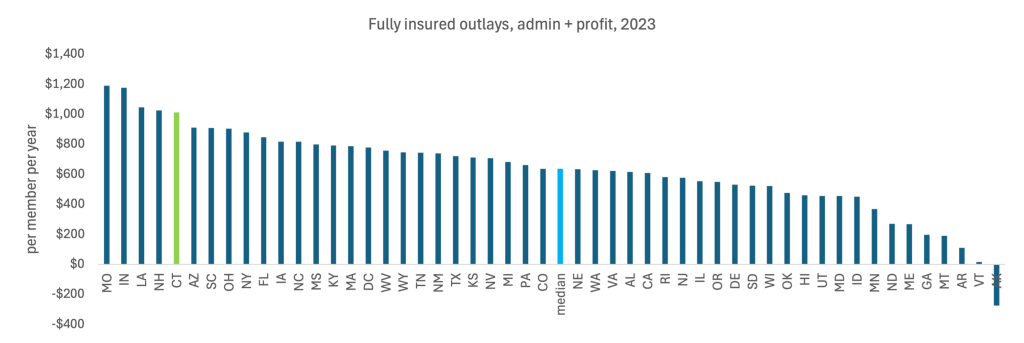
Connecticut Medicaid spent $467 less per person in 2023 on administration and corporate profit than most states, according to a new study published in Health Affairs. However, state residents in fully-insured health plans spent $412 more for administration and profit than most Americans, according to the authors from Brown University. In fully insured plans, the insurer takes the financial risk for healthcare costs. Individual and some small group plans are fully insured.
In more evidence that our Medicaid program is very efficient, the study found that HUSKY spent less than all but four other states on administration and profit. The study found that high MCO penetration in states correlates with higher administrative and profit spending. Five of the six states with the lowest administration and profit costs do not use Managed Care Plans (MCOs) to run their Medicaid programs, including Connecticut.
Data was not available on from all states. Source: Substantial Variation In Administrative Spending And Profit Across State Insurance Markets, 2023, Health Affairs, March 2026. Data was not available for all states.
A large part of the savings for non-MCO states is not having to pay for corporate profits. This study adds to the consensus from the literature that MCOs do not save money for states.
In contrast, the study found that administration and profit in Connecticut’s fully insured health plans was 65% higher than the US average.
Canada and France spend just half as much per person as the US on healthcare administration. The authors offer policy options for states to reduce health insurance administration including moving away from using MCOs to run their Medicaid programs.
Note: The researchers also evaluated administrative costs for self-funded plans. Nationally, those costs are about half what they are in either Medicaid or fully-funded plans. Unfortunately, they didn’t have data on Connecticut’s self-funded plan administrative costs.
Note: The methodology in the paper is unique and innovative. They did not use typical Medical Loss Ratio (MLR) or net cost of health insurance metrics to estimate administrative and profit costs. Use of MLR limits is controversial as it gives insurers no incentive to lower spending on unnecessary or overpriced healthcare services; 15% or 20% of a bigger number is a bigger number. Net cost of health insurance subtracts the costs of healthcare services from total premiums. In contrast, the Brown researchers used a “bottom-up” methodology by adding together the costs of administrative functions including claims processing, HIT spending, utilization management, sales, or other general administrative costs. They did not include case management, care coordination, or discharge planning in administrative costs.