
insurance
VT rejects troubling federal AHEAD changes, CT still considering it

Vermont, one of the first two states scheduled to implement the federal AHEAD model has withdrawn from the program. State officials stated, “Vermont originally pursued the model when it was launched in 2023 as an opportunity to strengthen our health care systems. However, new policy and operational guidance to bring Vermont in alignment with other…
Read MoreAnalysis: Questions missing in the Lamont-Elliot debate

In Wednesday’s debate, the only one we’ll get, between Connecticut’s Democratic candidates for Governor, there were no questions about healthcare. None. Affordability is a top priority for voters, and the staggering cost of healthcare is a big part of their anxiety. These are some questions I would’ve asked, and I’ll even give the candidates my…
Read MoreCT Medicaid Home & Community Services spending up, but that’s what we want

Read the report Recently, Connecticut Medicaid per member costs have grown significantly while enrollment is easing, according to the latest state financial report. Since switching from managed care organizations in 2012 to focus on care management, Connecticut Medicaid spending had stabilized while enrollment expanded significantly. With COVID, enrollment grew and per member costs dropped. Post-COVID…
Read MoreSeven CT hospitals warned about price transparency

Over 500 US hospitals, including seven in Connecticut, received warnings regarding compliance with 2019 price transparency requirements, according to the Associated Press. The requirements were designed to make care more affordable. The President is reportedly planning to ramp up enforcement of the federal transparency rule and more hospitals may receive warnings. Since 2019, many hospitals…
Read MoreHospital chapter in CT Healthcare Explained updated

We’ve updated the Hospitals chapter of CT Healthcare Explained. The update was prompted by new numbers and new topics, including potential impact of federal Medicaid cuts, payment rates, Medicaid rates, and private equity . CT Healthcare Explained is our explainer website cutting through the complexities of our state’s healthcare system. Like the other 17 topic…
Read MoreOne in ten CT adults forgo needed medical care due to cost, HR-1 likely to increase that rate
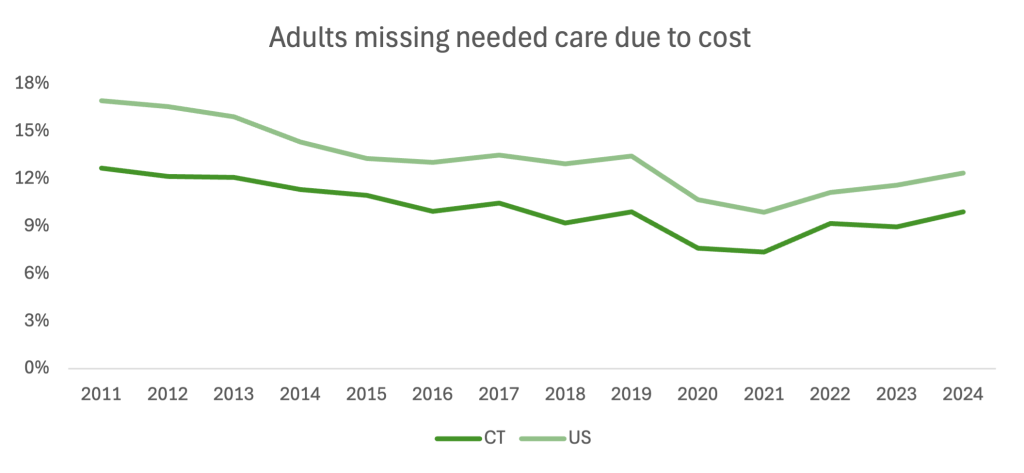
In 2024, 9.9% of adults in Connecticut missed needed care because of cost in 2024, according to an analysis of SHADAC data. That’s better than the US average at 12.4%. Both had been dropping as the number of uninsured fell but began rising again after COVID. Medical inflation has grown faster than general inflation since…
Read MoreFact Check: No correlation between CT hospital Medicaid share and profits

Download the data Connecticut hospitals have asserted that state Medicaid payment rates undermine hospital margins and force higher private plan rates. But the evidence doesn’t support the first assertion and is mixed on the second. As in most states, Connecticut Medicaid hospital payment rates are lower than rates that commercial plans pay. It’s important to…
Read MoreNew tool finds CT employer health insurance costs 8th highest in US
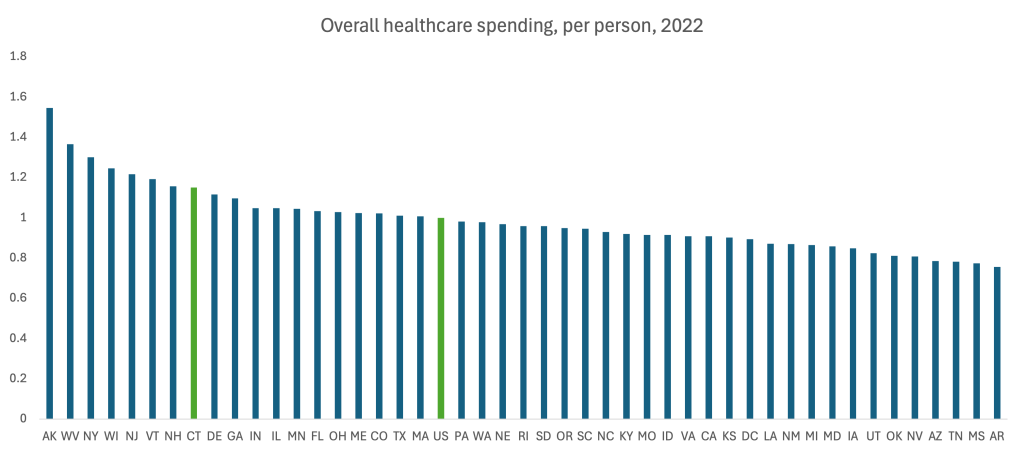
A new Health Cost Landscape data tool finds that Connecticut residents spend 15% more than the national average on employer-sponsored health insurance coverage. Only seven states cost more. But because of higher average incomes, the burden of healthcare costs is lower here than for most Americans. High prices are the main force driving up Connecticut…
Read MoreCT Medicaid admin costs are 5th lowest in the nation, but CT fully insured plans are the 5th highest
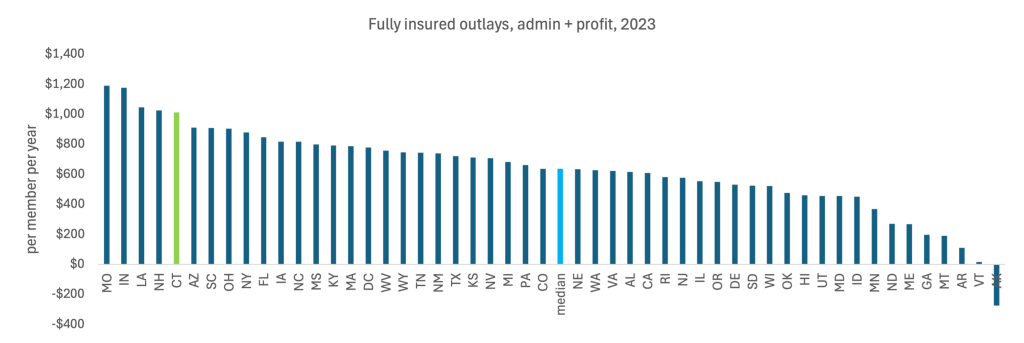
Connecticut Medicaid spent $467 less per person in 2023 on administration and corporate profit than most states, according to a new study published in Health Affairs. However, state residents in fully-insured health plans spent $412 more for administration and profit than most Americans, according to the authors from Brown University. In fully insured plans, the…
Read MoreReference pricing lowers healthcare prices, could save CT millions

Download the backgrounder Hospital prices are driving up healthcare costs making coverage unaffordable, in Connecticut and across the US. It’s hard to reduce hospital prices, especially in consolidated markets like Connecticut’s, where huge health systems have monopoly power to demand steep prices. But Oregon and Montana have been saving millions annually on just their state…
Read More