
New tool finds CT employer health insurance costs 8th highest in US

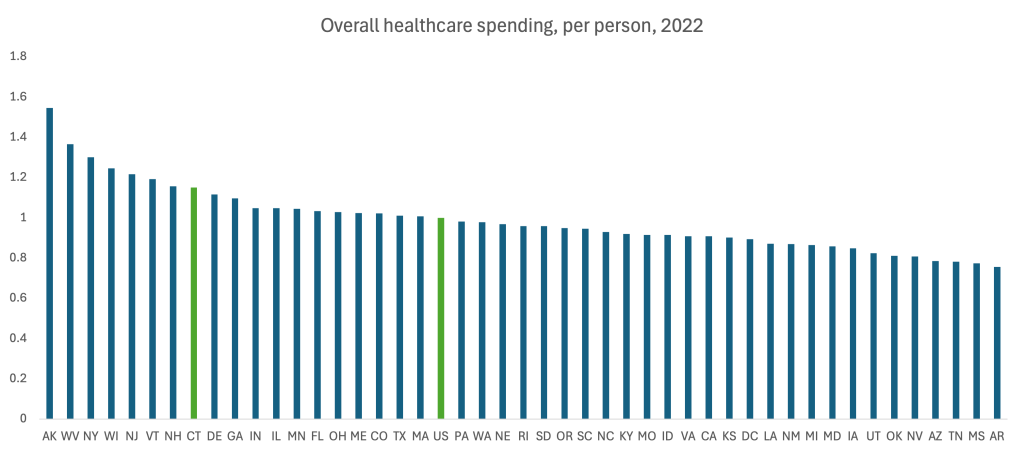
A new Health Cost Landscape data tool finds that Connecticut residents spend 15% more than the national average on employer-sponsored health insurance coverage. Only seven states cost more. But because of higher average incomes, the burden of healthcare costs is lower here than for most Americans.
High prices are the main force driving up Connecticut healthcare costs. Connecticut healthcare prices are 32% higher than the US average. High prices cross all care settings in our state. Connecticut inpatient, outpatient, and professional prices are 30%, 39%, and 29% percent higher than US averages, respectively. Prices aren’t high because Connecticut residents have more intense care needs and our use of care is just 9% higher than the US average.
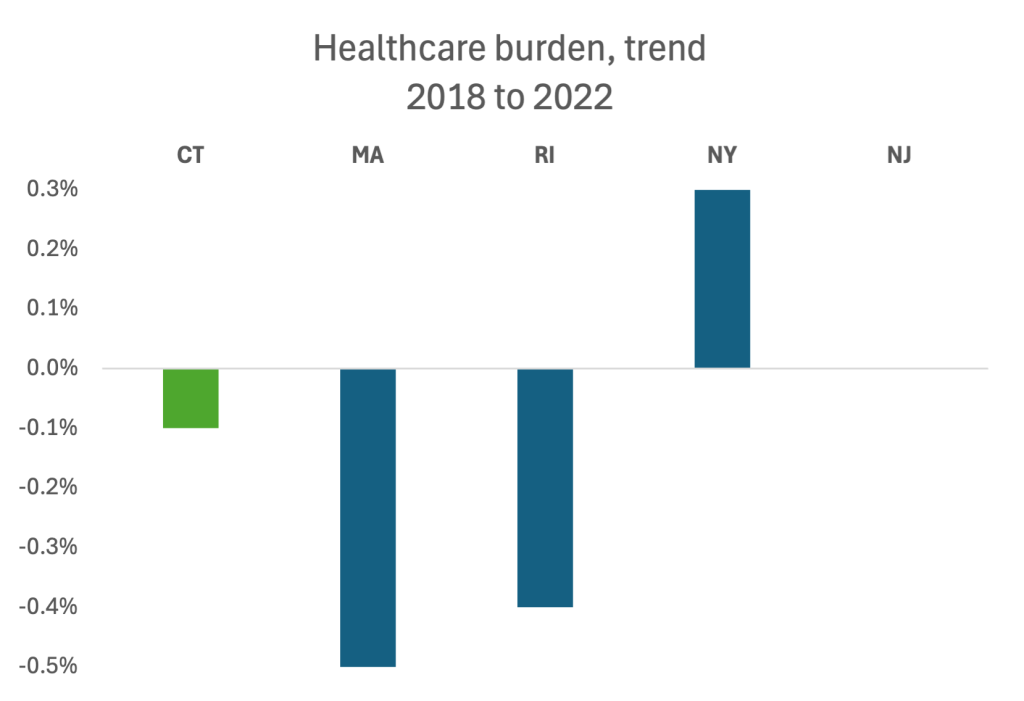
Despite the high costs, Connecticut residents’ burden of healthcare costs compared to incomes is 11% lower than for most Americans. However, Connecticut fell behind 37 other states in progress to make care more affordable from 2018 to 2022. We did better than New York and New Jersey in reducing the burden of care, but worse than Massachusetts and Rhode Island. New York was one of only three states where affordability got worse.
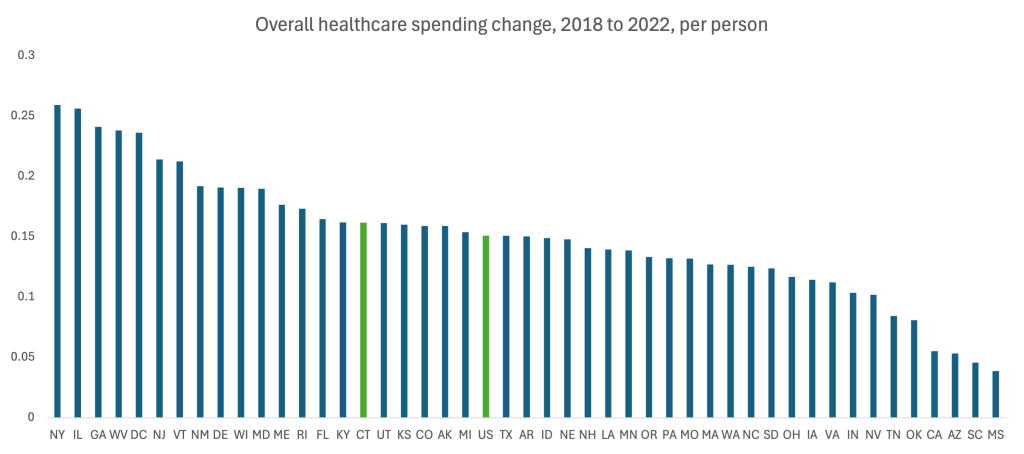
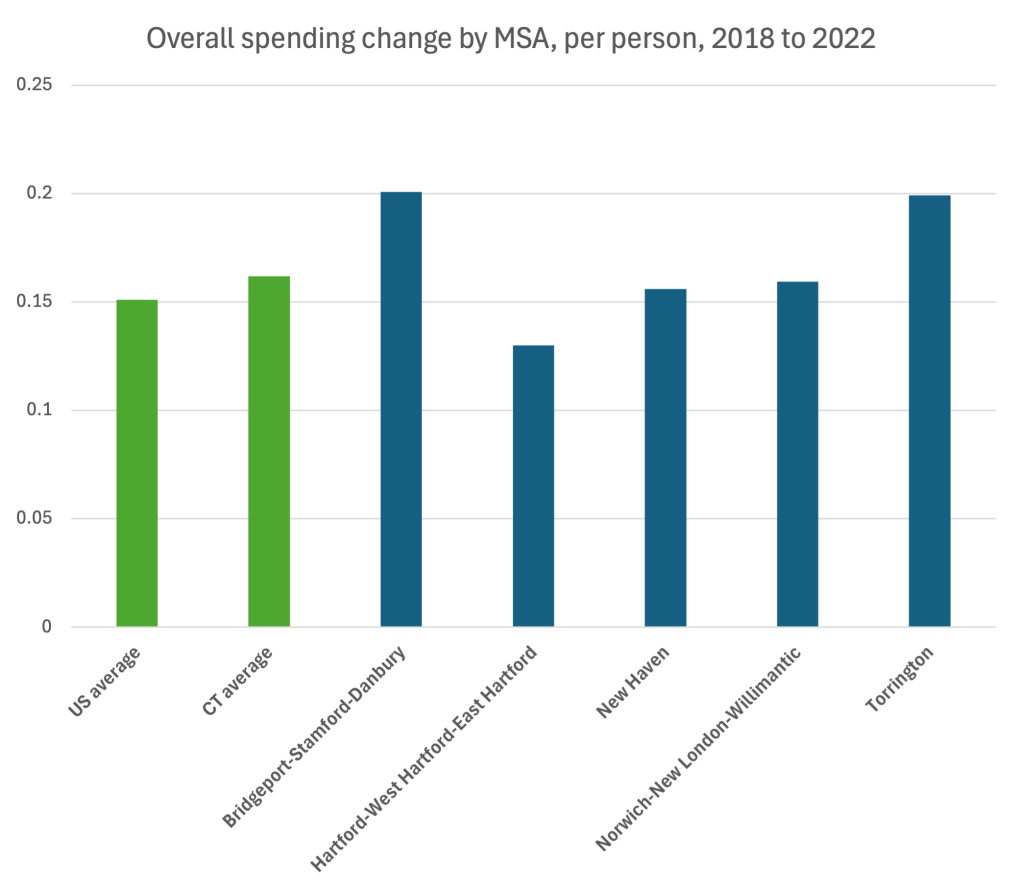
In more bad news, our costs are going up — growing 16% between 2018 and 2022. Our total costs grew faster than all but 15 other states.
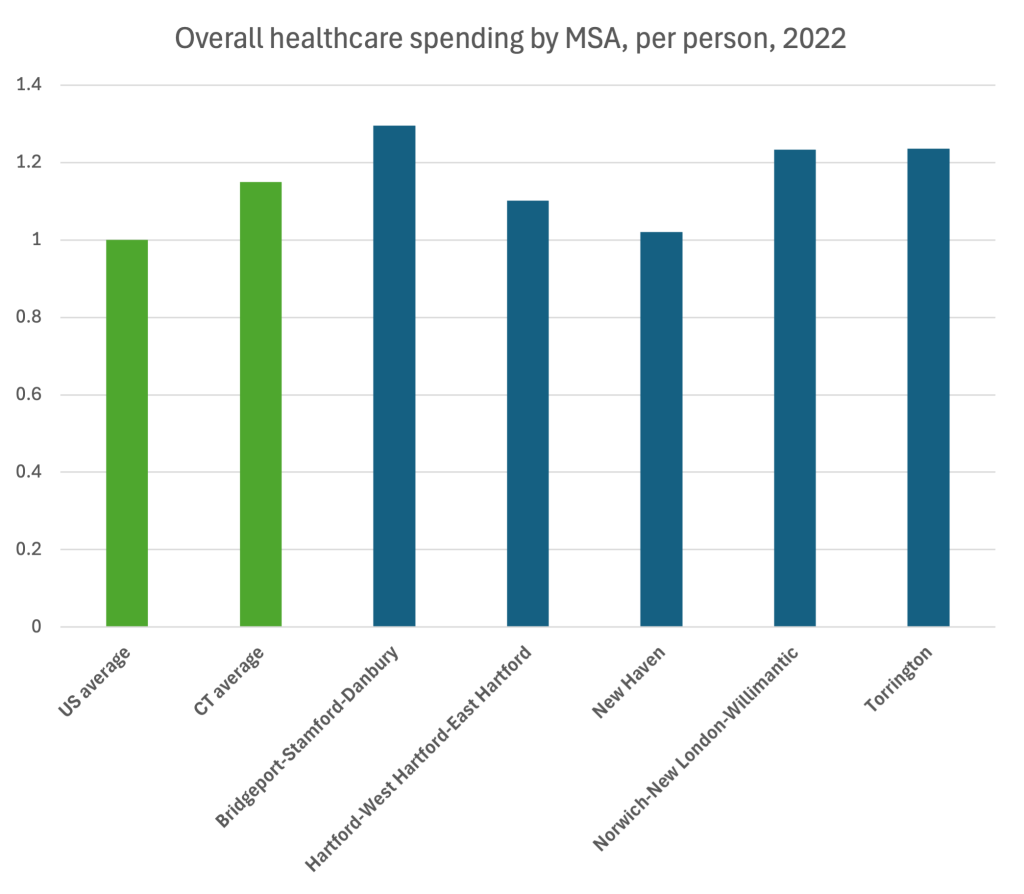
Overall spending in all Connecticut markets were higher than the US average. Costs were highest in the Bridgeport/Stamford area while the New Haven area had the lowest costs.
Total spending is also rising across all Connecticut markets faster than the national average. Costs are rising fastest in the Bridgeport-Stamford and Torrington areas. Only costs in the Hartford area are rising less quickly than either the US or Connecticut average.
The cost tool allows detailed comparisons both for 2022, the latest data year, and over time across inpatient, outpatient, and professional care. The data includes prices, use of care, service mix, total spending, and market concentration for the nation, the state, and individual markets within the state. Data is per person and only includes employer-sponsored health coverage.