
research
Connecticut healthcare employment coming back

Download the report Like other Connecticut workers, healthcare employment was hit hard by the pandemic in March, according to data from the CT Department of Labor. While the pandemic sharply increased demand in a few healthcare sectors to care for COVID patients, other sectors declined as people and providers delayed non-COVID care. But that is…
Read MoreCost Cap underservice monitoring plan is very weak, puts people at risk
Download the report This week, the Office of Health Strategy (OHS) unveiled their plan to monitor for unintended consequences of their plan to cap healthcare cost increases. OHS acknowledged in the plan that the Cap “may cause providers to reduce provision of necessary healthcare services so as not to exceed the benchmark.” Only a very…
Read MoreCT Medicaid eligibility and service decisions benefit members but also the state budget
It may be counter-intuitive but, despite our high incomes, Connecticut’s generosity in eligibility and provider rates means the federal government provides more support to our program than other states. Medicaid is jointly funded, and administered, by both federal and state governments. Federal funding is highest to states with the lowest per capita incomes. As a…
Read MoreCT hospital uncompensated care below US average, varies between hospitals, no relation to profits

Read the report According to the state’s latest report, Connecticut hospitals provided totaled $806 million in uncompensated care last year, up 5.3% from 2018. Uncompensated care is the total of charity care, provided to needy patients that hospitals never expected to be reimbursed, plus bad debt, care provided that patients couldn’t or wouldn’t pay for.…
Read MoreUS safe injection sites could save lives and save cities up to $4.35 million each year

Allowing safe sites for injecting opioids in the US would save lives and lower healthcare spending significantly for affected communities, according to ICER’s latest draft evidence report. In 2018, opioid overdoses killed 948 Connecticut residents and there are signals that the rate has risen during the pandemic. Supervised injection facilities (SFIs) are part of a…
Read MoreCommercial plans pay Connecticut hospitals 215% of Medicare prices, but that’s better than most states; No evidence of Medicaid or Medicare cost shifting
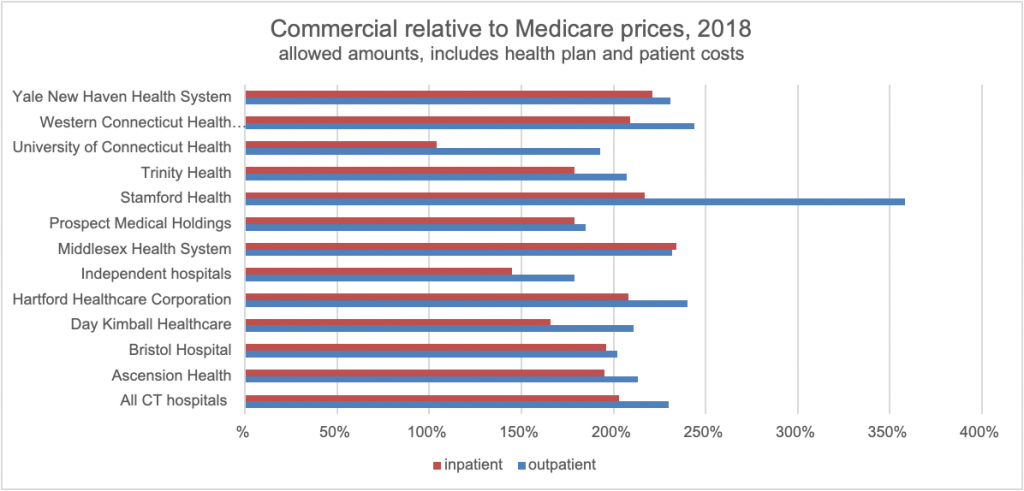
A new data set and report from RAND finds that Connecticut hospital prices paid by commercial plan were 215% of Medicare in 2018, varying from 144% for UConn Health to 282% for Stamford Health. If commercial plans had paid the same rates as Medicare that year, consumers would have saved $510 million. While high, Connecticut…
Read MoreCOVID hit Medicaid hard
Medicaid members were about 33% more likely to be diagnosed with COVID than other Connecticut residents, according to CHNCT’s presentation Friday to the Medicaid oversight council. The average age of members with COVID was 52 years but ranged from newborn to 102 years old. Like the rest of the population, COVID hit Medicaid members with…
Read MoreUpdated Advocacy Toolbox: How to make a difference, where to start, and how to get there

Healthcare policymaking in CT can be complex and frustrating. But you’re not alone and there is help. With generous support from the Connecticut Health Foundation, we’ve updated our Health Advocacy Toolbox. The comprehensive site covers legislative, administrative, and state budget advocacy, how to change public opinion, finding and working in coalitions, effective communications, and how…
Read MoreBook Club — The Catalyst: How to Change Anyone’s Mind

By Jonah Berger There are lots of books on persuasion. Most don’t add much to the last one. But The Catalyst is worth the time. Well-written — a high-value read. The author builds on newer science to break down how to change minds. Pushing and lecturing rarely work. First, figure out what people think now,…
Read MoreOne in three CT residents is anxious and/or depressed
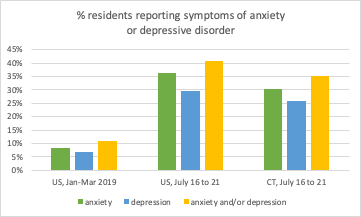
The good news is that the rate of Connecticut residents reporting symptoms of anxiety or depressive disorder is down some since the end of April, according to a new CDC survey. The bad news is that it’s three times higher than this time last year. The week of April 23rd, when Connecticut was deep into…
Read More