
research
Medicaid rolls up 3.9% since February
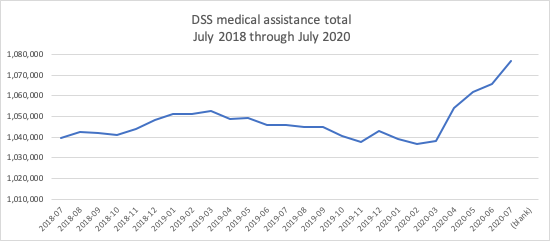
The number of people getting medical assistance through the state is up by 40,158 or 3.9% from February to last month, according to new numbers from DSS. This was expected as people lose jobs and the employer-sponsored coverage that comes with those jobs. With less income more state residents were expected to qualify for Medicaid.…
Read MoreBook Club: Deaths of Despair and the Future of Capitalism

By Anne Case and Angus Deaton Reversing a century of progress, life expectancy has fallen for three years in a row but only in the US. Rising rates of suicide, drug overdoses and alcoholism are largely to blame. There were early media reports about the trend, but this detailed yet readable book goes much farther.…
Read MoreUpdate: OHS committee slightly eases unrealistic cap for CT healthcare costs

In response to stakeholder concerns, at their July 29th meeting the Office of Health Strategy’s (OHS) Technical Team choosing the cap for future Connecticut healthcare costs eased their previous decision on how much healthcare costs for every state resident will be allowed to increase over the next five years. Many stakeholders have voiced concerns that…
Read MoreComprehensive updated resource on Connecticut’s health landscape from DPH, get involved

Almost one in six Connecticut children are food insecure and the number of state residents newly diagnosed with HIV has been dropping since 2010, according to the Dept. of Public Health’s new 2019 State Health Assessment. In 2017, 14.4% of Connecticut high school students used e-cigarettes, up from 2.4% in 2009. Over one in four…
Read MoreCost cap update – possible easing on growth cap but primary care target proves difficult
In response to concerns from many sources about potential harm to people, the Office of Health Strategy (OHS) is considering easing the proposed caps on the growth of all healthcare spending. In the latest Technical Team meeting, OHS and Bailit, the consultants running the project, said they would consider starting the cap next year higher…
Read MoreOne in three CT residents reported anxiety or depressive symptoms in June

Since the pandemic started, more people are reporting symptoms of mental illness. According to the Kaiser Family Foundation, 19% of Connecticut residents are experiencing mental illness and 36.6% report depressive or anxiety symptoms last month. Connecticut adolescents are twice as likely to report a major depressive episode as adults but adults are three times more…
Read MoreStudy finds PCMHs cost less, fewer ED visits than ACOs
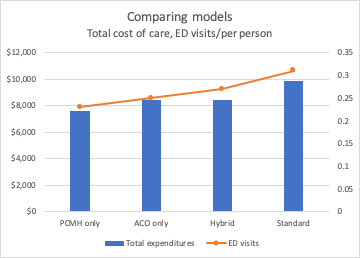
A new analysis finds that total healthcare costs and ED visits are significantly lower for adult patients of Patient-Centered Medical Homes (PCMHs) than for Accountable Care Organizations (ACOs), hybrids (both PCMHs and ACOs), or standard care (from facilities that are neither). PCMH patients had the lowest average total cost of care, 23% lower than standard…
Read MoreFact Check: Are primary care doctors underpaid?
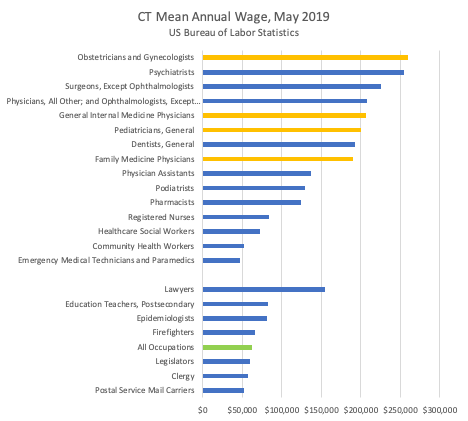
Download the Fact Check A statement was made in a recent Connecticut state public meeting that primary care physicians are paid less than specialists. The statement was made a recent Technical Team meeting for the Office of Health Strategy’s cost cap project considering a substantial increase in spending on primary care. The facts, however, are…
Read MoreOHS committee chooses unrealistic cap for CT healthcare costs

The Office of Health Strategy’s (OHS) Technical Team choosing the cap for future Connecticut healthcare costs has decided on a 3.1% allowed increase for next year, dropping over time to 2.7% by 2025. To illustrate the impact of the cost cap, consider the significant variability in Connecticut’s per capita all-payer total healthcare cost increases from…
Read MoreCOVID hitting CT minorities hard, but in different ways
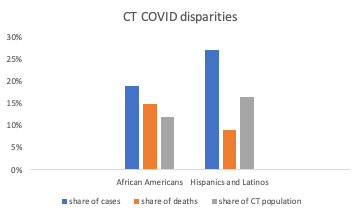
Evidence of disparities in the proportion of COVID-19 cases and deaths is growing in the US and in Connecticut. A state-by-state analysis by NPR of data from the COVID Racial Tracker finds African American Connecticut residents are more likely to contract the virus than other state residents and somewhat more likely to die of COVID.…
Read More