
healthcare markets
CT workers’ health benefits cost more, but growing more slowly and take less of our incomes

Download the report While total premiums, deductibles, and the workers’ share of premiums for Connecticut employee health coverage are higher than the US average, they have generally grown less quickly and consume less of our incomes than for other Americans from 2010 to 2019. Connecticut employer health coverage total premiums, employee share of premiums, and…
Read MoreCTNJ Op-Ed: Labels matter in healthcare, especially the misleading ones

The President was right – healthcare is complicated. There are lots of reasons, but a big one is language. What something is called can add to or lessen understanding. Sometimes it can be deceptive, giving the impression of a more acceptable definition than the truth. It rarely works for long, but a lot of harm…
Read MorePublic comments critical of OHS’s Cost Cap plan
Several comments submitted on the Office of Health Strategy’s plan to cap healthcare costs during the public comment period raised serious concerns. The concerns echo those raised in previous unanswered letters signed by dozens of advocates. Comments were submitted by CT legal services programs, Gaye Hyre on behalf of the advocate letter writers, and one…
Read MoreCommercial plans pay Connecticut hospitals 215% of Medicare prices, but that’s better than most states; No evidence of Medicaid or Medicare cost shifting
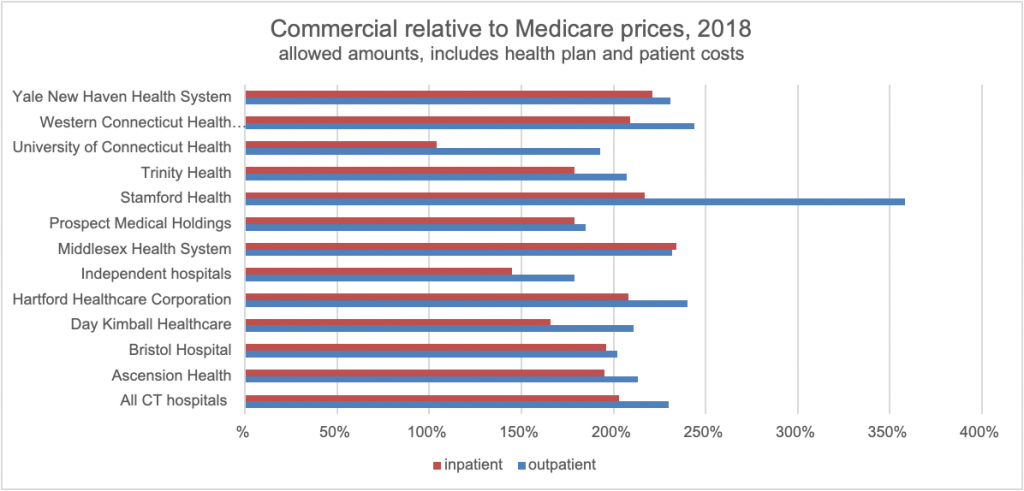
A new data set and report from RAND finds that Connecticut hospital prices paid by commercial plan were 215% of Medicare in 2018, varying from 144% for UConn Health to 282% for Stamford Health. If commercial plans had paid the same rates as Medicare that year, consumers would have saved $510 million. While high, Connecticut…
Read MoreNational survey of healthcare executives finds population-based/capitated payment models are rare and aren’t growing

The latest survey of 500 US healthcare executives by the Numeroff & Associates finds that only 10% of revenue is at financial risk and that rate has not changed in the last three years. In previous surveys executives predicted that they would have a much larger share of revenue at financial risk by now. Just…
Read MoreOHS Cost Cap committee retreats on quality, providers driving the delay
The Office of Health Strategy (OHS) rejected concerns been raised by stakeholders and some Cost Cap committee members that the Cost Cap on healthcare spending will be implemented at least a year before reporting on quality performance. Concerns center on the possibility of lowering costs by lowering the quality of care to achieve the ambitious…
Read MoreBook Club: Deaths of Despair and the Future of Capitalism

By Anne Case and Angus Deaton Reversing a century of progress, life expectancy has fallen for three years in a row but only in the US. Rising rates of suicide, drug overdoses and alcoholism are largely to blame. There were early media reports about the trend, but this detailed yet readable book goes much farther.…
Read MoreCost cap update – possible easing on growth cap but primary care target proves difficult
In response to concerns from many sources about potential harm to people, the Office of Health Strategy (OHS) is considering easing the proposed caps on the growth of all healthcare spending. In the latest Technical Team meeting, OHS and Bailit, the consultants running the project, said they would consider starting the cap next year higher…
Read MoreFact Check: Are primary care doctors underpaid?
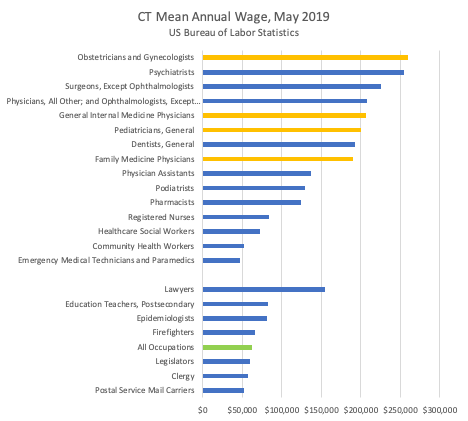
Download the Fact Check A statement was made in a recent Connecticut state public meeting that primary care physicians are paid less than specialists. The statement was made a recent Technical Team meeting for the Office of Health Strategy’s cost cap project considering a substantial increase in spending on primary care. The facts, however, are…
Read MoreCost cap project sets limits on healthcare spending without public input, ignoring pandemic impact
In meetings of the committee setting limits on healthcare spending for all Connecticut residents, it appears the advocates’ sign on letter and detailed concerns about the Office of Health Strategy’s (OHS’s) Cost Cap project were not heard. The plan is being developed by a Technical Advisory Team, with members chosen only by OHS, including some…
Read More