
CT Health Reform
Has MA’s cost cap worked? Should CT copy it?
Download the report The latest reports (here and here) on Massachusetts’s first-in-the-nation cost cap project raise questions about whether it has worked. Since the cap was implemented in 2013, consumer costs are growing faster than overall healthcare, inflation, or incomes. Despite almost eight years under their cost cap, Massachusetts’s out-of-pocket costs and premiums have grown…
Read MoreCTNJ Op-Ed: Labels matter in healthcare, especially the misleading ones

The President was right – healthcare is complicated. There are lots of reasons, but a big one is language. What something is called can add to or lessen understanding. Sometimes it can be deceptive, giving the impression of a more acceptable definition than the truth. It rarely works for long, but a lot of harm…
Read MorePublic comments critical of OHS’s Cost Cap plan
Several comments submitted on the Office of Health Strategy’s plan to cap healthcare costs during the public comment period raised serious concerns. The concerns echo those raised in previous unanswered letters signed by dozens of advocates. Comments were submitted by CT legal services programs, Gaye Hyre on behalf of the advocate letter writers, and one…
Read MoreCTNJ candidate questionnaire now online

Candidates’ answers to CT News Junkie’s questionnaire about policy issues facing Connecticut is now online. Several questions relate to healthcare. Inform your vote by checking out your candidates’ answers. Health questions for candidates: What should Connecticut do to re-tool our public health for COVID-19 and the possibility of future pandemics, while also addressing other chronic…
Read MoreMedian income CT residents squeezed between rising insurance premiums and inadequate subsidies

A new CMS analysis finds that between 2015 and 2019, US insurance premiums rose while enrollment in insurance exchanges went down. The report found that 85% of the drop in enrollment was in unsubsidized coverage. People with incomes below 400% of the federal poverty level ($51,040 for an individual, $86,880 for a family of three)…
Read MoreOHS committee considers how to sell the Cost Cap to stakeholders
Last week’s meeting of the Office of Healthcare Strategy’s Cost Cap committee, as they are wrapping up the project design, ended with discussion of how to ensure their project is successful in controlling healthcare costs. Despite developing the Cap during a pandemic, there has been considerable resistance and mistrust of the concept and the process.…
Read MoreCT Mirror: The state should lower healthcare costs without risking our health

Opinion from Kathy Flaherty: As Executive Director of the CT Legal Rights Project, an advocate for people with disabilities, and someone who identifies as disabled, I take issue with “Flaws in CT’s healthcare system must be identified to be corrected” describing the Office of Health Strategy’s (OHS) plan to limit healthcare cost increases. . .…
Read MoreCost cap committee excludes patients’ provider choices from primary care spending increase
On Thursday, the main committee convened by the Office of Health Strategy (OHS) met to continue their work to set a cap on how much healthcare costs can increase and, at the same time, double spending on primary care. At the meeting they codified a narrow definition of primary care provider for purposes of calculating…
Read MoreOHS Cost Cap committee retreats on quality, providers driving the delay
The Office of Health Strategy (OHS) rejected concerns been raised by stakeholders and some Cost Cap committee members that the Cost Cap on healthcare spending will be implemented at least a year before reporting on quality performance. Concerns center on the possibility of lowering costs by lowering the quality of care to achieve the ambitious…
Read MoreMedicaid rolls up 3.9% since February
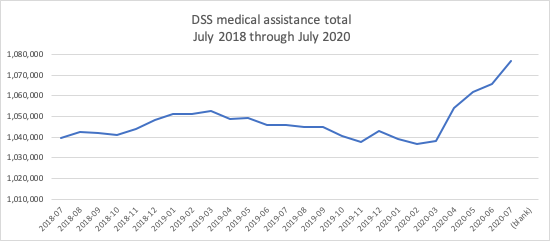
The number of people getting medical assistance through the state is up by 40,158 or 3.9% from February to last month, according to new numbers from DSS. This was expected as people lose jobs and the employer-sponsored coverage that comes with those jobs. With less income more state residents were expected to qualify for Medicaid.…
Read More