
Posts by Ellen Andrews
CTNJ: Forecast Estimates More Than 100,000 New CT Medicaid Members
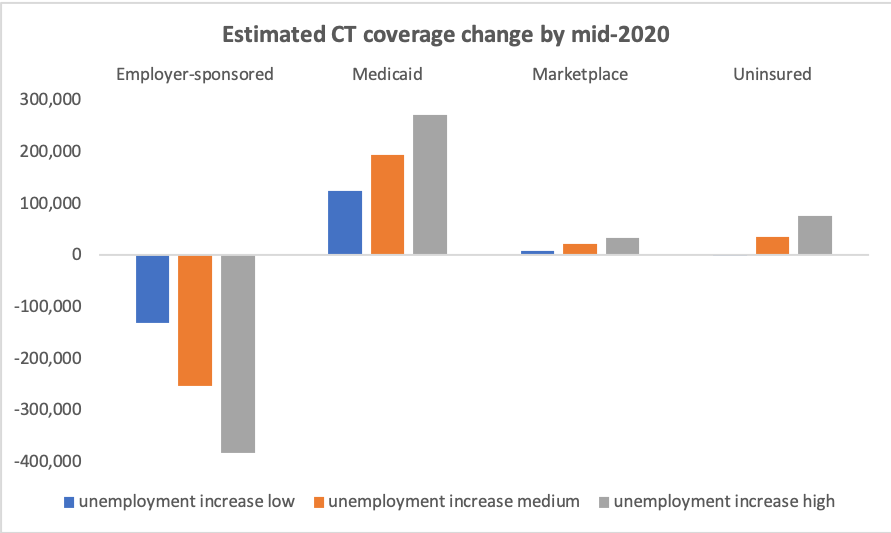
According to modeling by Health Management Associates, the COVID-19 pandemic could raise Connecticut’s Medicaid rolls 15% to 32% by mid-2020, depending on how much unemployment grows. Connecticut residents with employer-sponsored coverage could drop by 130,000 to 382,000 and Access Health CT coverage could grow by 8,000 to 33,000. Uninsured could rise by 77,000. Read more
Read MoreCTNJ: Analysis — Will COVID-19 Make Health Insurance Premiums Skyrocket?

Not necessarily. COVID-19 could cost the US between $34 billion and $251 billion for testing, treatment and care. Some analysts have predicted that premiums will rise between 4% and 40% next year because of the pandemic. Because consumers, taxpayers and workers ultimately pay the bills, from our taxes, our lost wages, our premiums, and directly…
Read MoreLetter urges state to go farther to protect Connecticut’s health and affordability

Building on previous letters from legal services, the CT Health Policy Project sent a letter today thanking the state for important protections adopted to protect Connecticut’s health during the pandemic. We also urged the state to adopt new policies and expand some already adopted. Require insurers to automatically continue providing commercial insurance during the crisis…
Read MoreWords matter – Unintended consequences of rush for COVID-19 treatment and poor communication

Scientists are under great pressure, internal and external, to find successful treatments for people seriously ill with the new coronavirus. Scientists are heroes, working with exceptional “vigor and speed” to find options. Unfortunately, sometimes that pressure results in early results being misunderstood and misused. Research conducted during a pandemic is not optimal for rigorous science…
Read MoreNew, confusing twist on state’s HIE plans to sell insurers access to personal medical records

In new information, the Office of Health Strategy says their Health Information Exchange (HIE) will not provide insurers or large health systems — Accountable Care Organizations (ACOs) – access to individual patients’ data. Advocates and providers have raised concerns that access to personal medical records could allow insurers and ACOs to inappropriately limit care and…
Read MoreIs Connecticut ready for COVID-19?

Almost half (45%) of Connecticut adults have one or more clinical risks that could complicate COVID-19 infections, very close to the US average of 44%, according to a new report from the Commonwealth Fund. The report compares states across clinical risk factors of adults, state health system capacity, insurance coverage and other cost barriers to…
Read MoreCTNJ: The recession is here, and healthcare is in the center of it
After the longest economic recovery in US history, we’ve been expecting a recession for a long time. We knew when it came, Connecticut healthcare would be hit hard. But no one expected this. Connecticut didn’t fare well in the last recession and we took longer than other states to build back the jobs we lost.…
Read MoreMore HIE concerns from advocates and others

Public comment to the Office of Health Strategy about the state’s planned Health Information Exchange raised concerns, including those regarding privacy and selling/monetizing the data shared in the advocates letter. Connecticut’s three legal services agencies sent a letter with similar concerns on Friday. Advocates’ concerns were raised by members at last week’s online Health IT…
Read MoreACA turns ten in troubled times

Ten years ago today, President Obama signed the Affordable Care Act. While the nation is now reeling from a terrible pandemic, imagine if 17 million more Americans didn’t have healthcare coverage, insurers could still drop people with pre-existing conditions, and charge women and cancer survivors more. While it was important, the ACA was never meant…
Read MoreWalletHub – CT third worst state for doctors

According to WalletHub’s latest rankings, Connecticut ranks 49th among states and DC for physician practice. Nationally, physician is the highest paying job but new doctors leave medical school with $194,000 in student debt on average. As we all may be relying on physicians and other healthcare providers during this crisis, remember that March 30th is…
Read More