Stats & Data
COVID’s lessons — and what we can do about them

COVID exposed Connecticut’s underlying health disparities to new audiences, receiving a lot of public attention. But what have we learned? A new report from the CT Health Foundation looks at what went wrong, what went right, and what we can build on to fix this long-standing problem. Going back to the old-normal of inequities isn’t…
Read MoreFact Check: Does OHS’s Primary Care Roadmap include capitation? Yes, 31 times

In the Insurance Committee’s March 1st public hearing on HB-5042, advocates stated that the Office of Health Strategy’s Primary Care Roadmap plan, authorized in the bill, includes capitation as the payment model. Primary care capitation has failed in Medicare despite significant investment and multiple trials. Advocates are concerned that, if implemented, the Roadmap would divert…
Read MoreNew tool finds all CT health systems’ commercial prices are far higher than needed to cover expenses

According to a new tool, Connecticut hospitals would have needed commercial rates equal to 135% of Medicare levels in 2020 to cover their expenses, much higher than the US average of 114%. However, every health system in Connecticut charged well above that level, far more than needed to cover expenses. The National Academy for State…
Read MoreCTNJ Op-ED: How much do CT hospitals spend on administration? No one knows

There’s a growing consensus that hospital prices are the main driver of rising healthcare costs and insurance premiums in Connecticut. The research lays the blame on consolidation in the market. Read more
Read MoreAnalysis: CT hospital finances during COVID’s first year

Download the report Download the extracted data In 2020, Connecticut hospitals’ revenues exceeded expenses by 2.61% or $325 million. Hospitals averaged 1.9% of expenses in uncompensated care, less than the US average. Top hospital executives averaged $2.6 million in total compensation. Hospitals paid $1.3 billion in fees to corporate parent health systems. Large health systems…
Read MoreAuto crash deaths up 17.1% last year, and not because 2020 traffic was down

The latest stats on Connecticut auto crashes finds that in the first nine months of 2021 there were 253 deaths compared to 216 in 2020, an increase of 17.1%. Nationally deaths from car crashes in 2021’s first nine months were 31,720, up 12% from those months in 2020. But it’s not because deaths were down…
Read MoreYale Policy Institute report on CT’s local public health infrastructure and systems

COVID crystalized the importance of a strong local public health system across our state and the nation. In their latest report, student researchers from the Public Health Center of the Yale Policy Institute assessed Connecticut’s local public health system in the context of the COVID pandemic using Public Health 3.0, the latest national standards. The…
Read MoreBook Club — How Charts Lie: Getting Smarter about Visual Information

Data visualization is trendy for a reason. How Charts Lie by Alberto Cairo describes how well-designed charts and graphs can help make numbers clear, especially as competition for readers’ attention grows. But badly designed charts can confuse or even lie to the reader. Healthcare is more confusing than most areas so deceptive charts are more…
Read MoreNew Cost Cap industry-driven committee gets going
Members of the Office of Health Strategy’s (OHS) latest committee to drive down the growth in Connecticut’s healthcare spending moved past their initial reluctance to engage in their November and December meetings. OHS expects the provider and insurer-dominated committee to agree on ways to reduce their own costs/profits. Hopefully, they do not also use the…
Read MoreFAQs on OHS’s Primary Care Roadmap
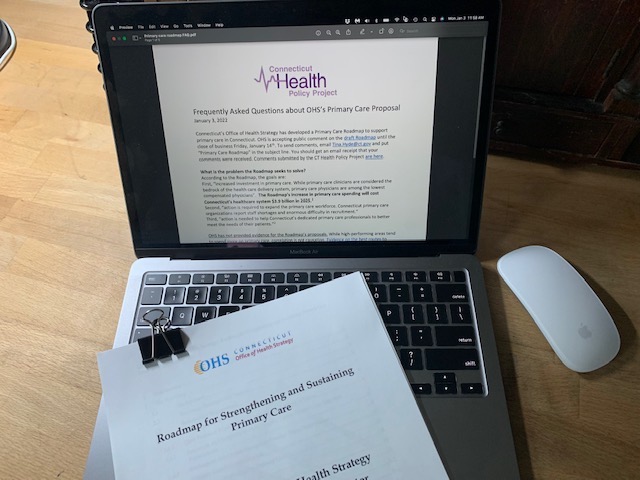
Download the FAQs here Connecticut’s Office of Health Strategy has developed a Primary Care Roadmap to support primary care in Connecticut. OHS is accepting public comment on the draft Roadmap until the close of business Friday, January 14th. To send comments, email Tina.Hyde@ct.gov and put “Primary Care Roadmap” in the subject line. You should get…
Read More