healthcare markets
CTNJ: Insulin – Once a Gift, Now Serving Greed

Today is the hundredth anniversary of the discovery of insulin. Diabetes affects about 367,000 adults in Connecticut and that number is rising. Before the 1920s, a diabetes diagnosis was a death sentence. The discovery of insulin allowed people with diabetes to live their lives. Until the 1970s insulin was affordable, but it’s now so costly…
Read MoreCTNJ: CT needs to focus on real health reform
Connecticut insurance premiums were the sixth highest among states for both individual and family coverage in 2019. Making healthcare more affordable was the drumbeat from voters last year. But CT policymakers have responded with weak options that kick the can down the road. Controlling the drivers of health costs is advanced placement politics. Powerful industries…
Read MoreOP-ED | Controversial New Alzheimer’s Drug Could Break the Bank
Alzheimer’s disease affects six million Americans, stealing memories years before it takes lives. Aduhelm, the first drug intended to treat the Alzheimer’s disease process rather than symptoms, was highly anticipated by patients and families. But it has disappointed on many levels. It isn’t clear that it actually helps patients and troubling side effects are common.…
Read MoreBOOK CLUB — The Right Price: A Value-Based Prescription for Drug Costs

For your summer reading. The Right Price: A Value-Based Prescription for Drug Costs offers the best explanation I’ve found of how drug costs are set, and how they should be. Using real-life patient stories, the authors give a balanced and comprehensive look at fair and reasonable pricing for a product that epitomizes market failure. The…
Read MoreANALYSIS | Who In Health Care Made Money on COVID?
Many COVID heroes who put their lives at risk or died caring for others. We all owe healthcare providers, scientists, public health professionals, and other frontline workers a huge debt of gratitude. But the healthcare industries did just fine. Four of the ten companies that profited most during the pandemic are in healthcare. Read more
Read MoreNPR’s Frontline features Waterbury Hospital and private equity impact on hospitals

The latest NPR/Frontline investigation focuses on very unequal resources at US hospitals due to market forces and unequal government support. The second half of the documentary focuses on the impact of private equity buying safety net hospitals, which has doubled in the last decade. An expert describes how private equity firms purchase under-valued hospitals, cut…
Read MoreOP-ED | When Data Becomes An Excuse To Prevent Change
Data is important. The drumbeat for data-driven policymaking in health care isn’t wrong. Policy decisions that aren’t informed by independent, valid analysis can cause more harm than good. But it’s important to know when we have enough data so we can get to work. Read more
Read MoreConnecticut healthcare employment COVID recovery stalls out

Download the report Like other Connecticut workers, healthcare employment was hit hard by the pandemic in March 2020, according to data from the CT Department of Labor. While the pandemic sharply increased demand in a few healthcare sectors to care for COVID patients, other sectors declined as people and providers delayed non-COVID care. That began…
Read MoreConnecticut individual plans are profitable
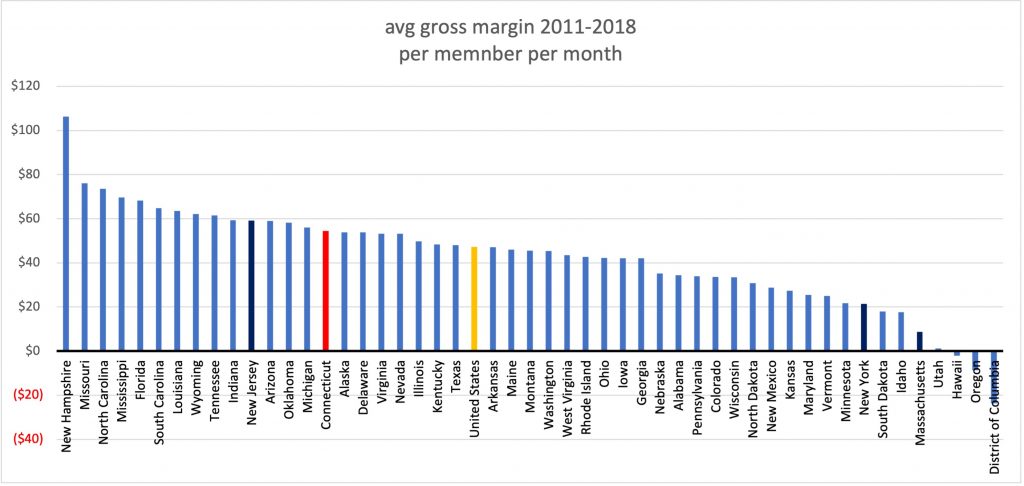
Download the report here Individual coverage in Connecticut, , has been more profitable than most states. From 2011 through 2018, each month $55 of premiums went to profit in Connecticut, the 15th highest profitability among states and above the US average of $47. Individual plans in Massachusetts and New York were far less profitable, while…
Read MoreOP-ED | Making the Public Option Better
Commercial health insurance premiums in Connecticut are the sixth highest in the nation and they continue to grow faster than inflation. While we’re making progress, it’s too slow. A public health insurance option to compete with private plans is getting a lot of attention from legislators and it makes sense conceptually. But Connecticut consumers deserve…
Read More