
health disparities
CT ozone pollution among worst in US

Fairfield is the 19th most ozone polluted US county for 2017-2019 according to the American Lung Association’s latest report on the nation’s air quality. All but two Connecticut counties earned an F for the number of high ozone days. High ozone levels cause inflammation in the lungs, decreased lung function, and susceptibility to respiratory infections…
Read MoreCTNJ Opinion: Remember Public Health’s Value After COVID Is Gone

The COVID-19 pandemic has focused a bright light on the weakness of the U.S. public health system. Countries with strong public health systems fared much better in controlling the virus’ spread. America used to have a strong public health system. From 1900 to 2000, life expectancy rose by 30 years. Contrary to public opinion, it…
Read MoreHUSKY COVID update – new enrollments lag, lots of money to providers, and telehealth is very popular

At Friday’s Medicaid Council meeting, we learned that while new HUSKY applications recovered last fall from its drop last spring, they fell again sharply this January and February. The reasons for the volatility during a serious recession are unclear. DSS focused on how HUSKY has responded to the COVID pandemic. Now covering over a million…
Read MoreCT life expectancy good news
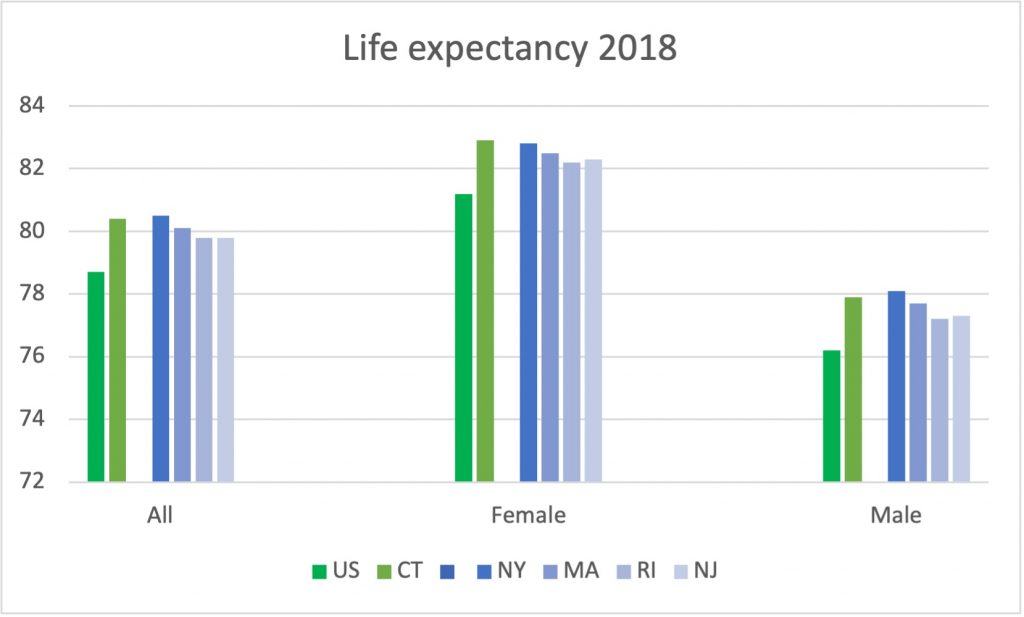
Connecticut residents can expect to live 1.3 years longer than other Americans, according to a new CDC analysis. Based on age-specific death rates in 2018, well before the pandemic, Connecticut residents lived longer than all but four other states, Hawaii (#1), California, New York, and Minnesota. Connecticut also ranked 5th in life expectancy at birth…
Read MoreAccessHealthCT report offers roadmap to address disparities

Access Health CT has published a new, very well-researched description, both quantitative and qualitative, of Connecticut’s health disparities and COVID’s impact. The graphic on page 2 following the lives of two boys, Marcus and Tyler, born on the same day but into very different circumstances, makes the impact tangible. I’ll be using it as a…
Read MoreCTNJ: Real Conversation Would Beget Lower Health Care Costs
I recently had an interesting conversation with a lobbyist for the insurance industry. We planned to talk about our narrow legislative issues to find any common ground. Predictably, we disagreed on some key points, but we agreed on a lot more. We agreed that it’s hard to get people across the health care system onto…
Read MoreGovernor’s budget includes drug cost control and exchange subsidies, but misses other health priorities

Released today, the Governor’s budget proposal for the next two fiscal years acknowledges the importance of addressing critical health priorities, especially during a pandemic. The document highlights the state’s public health challenges of funding and implementing COVID testing, treatment, and vaccination all while facing a severe economic slowdown, high unemployment, and increased demand for social…
Read MoreCTNJ: OP-ED | State Should Set Uniform, Public Standards For Rationing Health Care
Disparities in healthcare are not new in our state, but the pandemic has intensified the unfairness. The aged, people with disabilities, and communities of color have been especially hard hit by the virus and the recession. Unfortunately, a striking example of that increased unfairness is reflected in Connecticut hospitals’ policies for rationing scarce resources during…
Read MoreTop Stories of 2020

A year ago, our predictions for 2020 missed all but the recession. COVID has us giving up on predictions, so we’ll just take a look back at our top stories of this year. Advocacy Toolbox now online — Updates include specific, real world tools for legislative, administrative, and state budget advocacy, how to change public…
Read MoreCT housing and economic development training institute now accepting applications

Housing and health are intimately linked. Housing that is unstable, unsafe, poor quality, and a financial burden all affects the health of residents and communities. As these challenges grow, Connecticut’s housing and economic development workforce is predominantly male, white, and growing older. Professionals in the field are retiring at a faster rate than new entries…
Read More