Three years after 988 mental health line launch, impact is mixed

Studies considering the impact of national 988 system finds significant variation between states, but access to emergency services after the call is deficient nationwide. The 988 phone system for mental health crises launched nationwide in July 2022, providing a single easily-remembered number for mental health crises anywhere in the country. Call rates increased significantly after 988 was implemented.
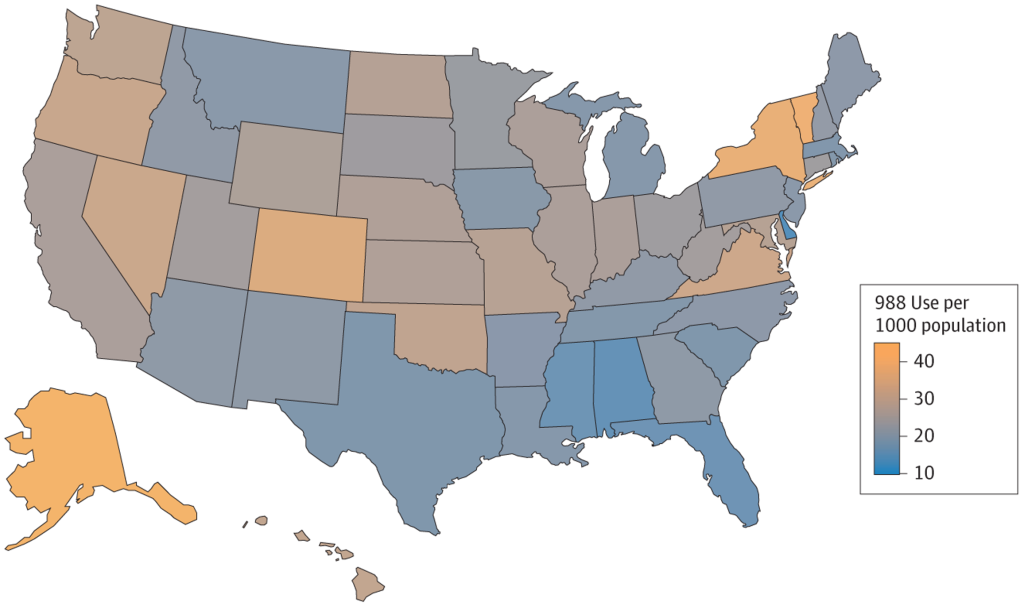
A new study finds the national rate of 988 calls in the last year was 23.7 per 1,000 population, but state rates varied considerably. Alaska was highest at 45.3 and Delaware lowest at 12.5. Connecticut’s 988 call rate is about 20 per 1,000 population, above Massachusetts and Rhode Island, but well below New York and Vermont.
However, another study this year finds that emergency mental health service access for referrals is inadequate, even three years after 988 began taking calls. The authors found that nationally, access to peer support services increased from before 988 to a year later (November 2021 to June 2023). However, access to psychiatric walk-in services dropped significantly and smaller decreases in in mobile crisis response and suicide prevention services.
According to that study, Connecticut’s experience was similar to the US trend. Peer support service access increased significantly after 988 implementation. But emergency psychiatric walk-in services were down significantly, mobile crisis services were up slightly, and there was no change in suicide prevention services.
According to the federal Health Resources and Services Administration (HRSA), as of March 31st, Connecticut has only enough mental health providers to meet 30% of our needs.
In Connecticut, 988 calls go to our pre-existing 211 program that has been taking suicide crisis calls for 40 years. The original phone line has been expanded to include text and chat contacts for help. Last year, they handled 186,905 calls or one call every three minutes. The vast majority (96%) of calls are answered within five seconds. Currently, the service can keep up with call volume, but increasing demand may require new resources.