
Obesity in Connecticut is stabilizing, but it’s a serious problem. Federal cuts and high drug prices aren’t helping.


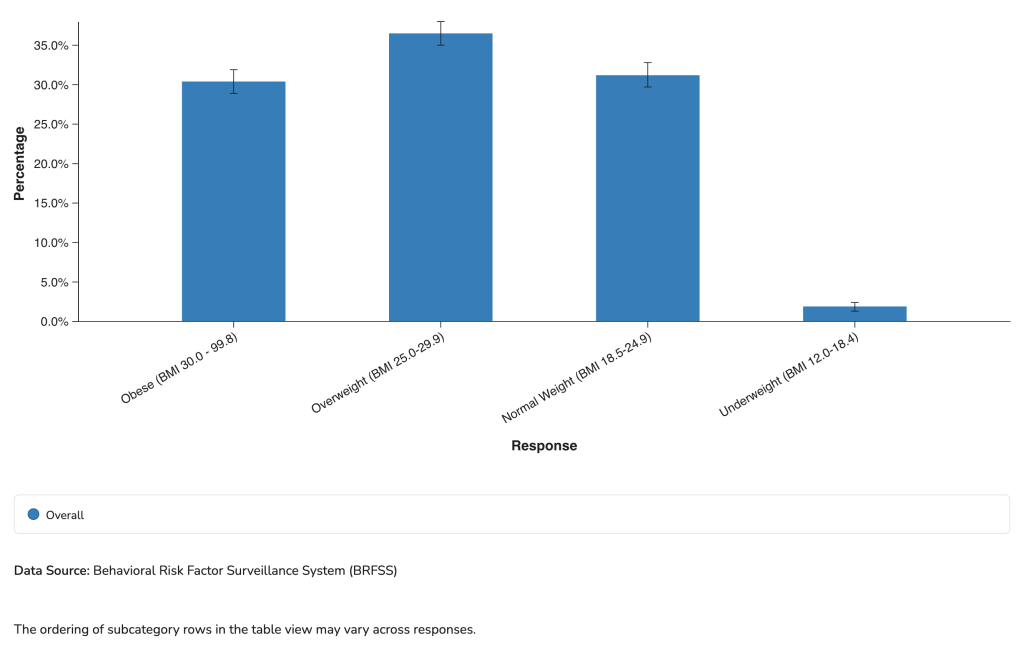
Just over 30% of Connecticut adults were obese last year, according to the latest report by the Trust for America’s Health. In good news, that rate has leveled off since 2021. Nationally, obesity rates are also stable at 40%. Unfortunately, that is too high.
Obesity is associated with higher mortality and higher healthcare costs. Obese adults are more likely to suffer from diabetes, high blood pressure, heart disease, stroke, arthritis, depression, sleep apnea, liver disease, kidney disease, gallbladder disease, and many types of cancer. Obesity is not good for your health.
According to federal data, another 37% of Connecticut adults were overweight last year. Just one third of us (31%) were normal weight.
Obesity is also not evenly distributed across Connecticut. Black adults in Connecticut are 45 times more likely to be obese; Hispanics are 23% more likely. Connecticut adults without a high school diploma are 52% more likely to be obese than college graduates. Adults in Connecticut households with incomes between $15,000 and $24,000 are 79% more likely than those with incomes over $200,000.
Unfortunately, current healthcare trends are not helping. While GLP-1s offer hope to people who struggle with obesity, rising uninsured rates from Medicaid cuts, and the outsized costs of the drugs will lower access. Federal SNAP cuts will also reduce access to healthy food, further expanding obesity. Federal cuts to staff and resources for proven public health programs that target obesity and turning the food pyramid on its head will also hurt.
The report includes sensible recommendations to lower obesity rates and make Americans healthier.