
Stats & Data
CT healthcare price variation varies

Prices vary by city and for selected healthcare treatments, in some cases substantially, according to Healthscore CT, using the new All Payer Claims Database from the CT Office of Health Strategy and UConn Analytics and Information Management Solutions. The site provides important information on cost and quality for consumers and payers shopping for healthcare services…
Read MoreIf the ACA is overturned, one in four Connecticut adults could lose coverage due to a pre-existing condition

A new report from the Kaiser Family Foundation estimates that 529,000 non-elderly adults (24%) in Connecticut have pre-existing health conditions that could affect their ability to get or afford health insurance if the Affordable Care Act (ACA) is overturned. Researchers estimate that 27% of non-elderly adult Americans have a health condition and 45% of families…
Read MoreCTNJ: CT’s uninsured rate is down and stable, so who’s still uninsured?

According to the latest numbers from the US Census, 187,000 Connecticut residents or one in twenty of us, were uninsured last year. That’s both good and bad news. Read more
Read MoreConnecticut deductibles are high and rising, but premiums are rising more slowly
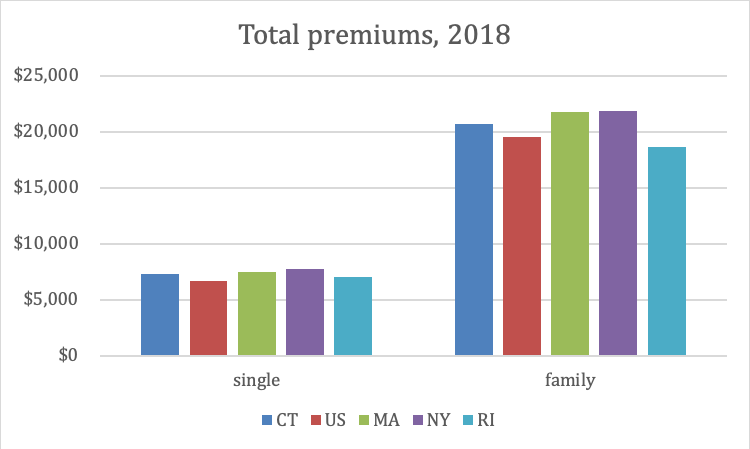
Download the report New numbers from the 2018 US Medical Expenditure Panel Survey finds that deductibles for private-sector health insurance in Connecticut are high at $2,322 for single coverage and $3,784 for families, the 3rd and 9th highest among states respectively. Deductibles more than doubled between 2008 and 2018 both in Connecticut and the nation.…
Read MoreConnecticut’s uninsured rate stabilizes, retaining ACA gains

Download the report New numbers from the US Census Bureau report that 187,000 or 5.3% of Connecticut residents were uninsured last year. That number is down slightly from the year before when the uninsured rate was 5.5%, but above 2016’s rate at 4.9%. The new data continues the trend of fewer uninsured that began with…
Read MoreCT Medicaid child checkup rates jumped when HMOs were fired
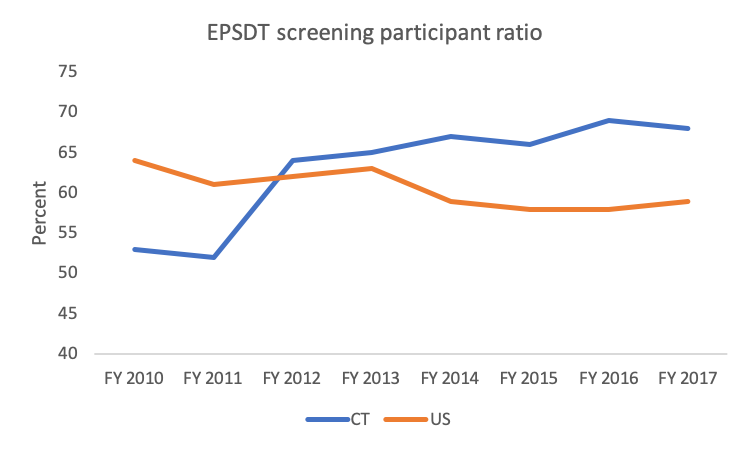
Well-child screenings increased twelve percent for HUSKY children between FY 2001 and FY 2012, according to a new report from the Government Accounting Office. While correlation is not causation, it is important to note that on January 1, 2012 Connecticut Medicaid payment shifted from capitation through private managed care companies to our current managed fee-for-service…
Read MoreCT Health Policy Project’s 20th Anniversary: Progress, but lots of challenges ahead

Read the report Since 1999, when the CT Health Policy Project was founded, Connecticut’s healthcare landscape has changed in both predictable and unpredictable ways. Costs are rising faster than our economy is growing, and those costs are falling disproportionately on consumers. Experts are predicting another recession and it’s unclear if Connecticut’s healthcare landscape is ready.…
Read MoreCTNJ: A recession is coming and it could hit Connecticut healthcare hard
While President Trump disagrees, a recent survey found that three in four economists expect the US economy to enter a recession by 2021. Recessions are a natural part of the economic cycle – it’s not a question of whether it will happen, but when. The last recession, in 2008, hit Connecticut especially hard, and in…
Read More2020 insurance premium requests increase lower for individuals on AccessHealthCT, most of whom are subsidized, older and higher risk
Connecticut insurers have filed their requests for individual and small group premium increases for 2020 with the CT Insurance Dept. Requests vary from an average reduction of 9.8% for CTCare individual plans outside AccessHealthCT, our state’s insurance exchange, to 22% average increases for Aetna small group plans also outside AccessHealthCT. Six in ten people in…
Read MoreJoin webinar for patients on leading methodology to evaluate the value of costly treatments

September 4th all patients and groups are invited to a webinar to give input on ICER’s Value Assessment Framework methods. The non-profit Institute for Clinical and Economic Review (ICER) is the nation’s leading independent analyst of evidence on the effectiveness and value of drugs and other treatments. ICER produces public reports used by Medicare, Medicaid,…
Read More