
Smart Savings
CTNJ: Analysis — Control Prices to Lower Health Insurance Premiums

Connecticut health insurance premiums are the sixth highest in the U.S. While our costs are rising less quickly than other states, that’s cold comfort to Connecticut’s households and employers. This isn’t a new problem and it has not been ignored. The simple fixes haven’t been enough. Read more
Read MoreUnjustified price increases for seven drugs in 2019 cost US healthcare $1.2 billion, CT can remedy this

According to a report released today, in 2019 the US health system spent an extra $1.2 billion on price increases for seven drugs that were not supported by clinical evidence. Enbrel led this year’s list costing Americans $403 million extra for an 8.9% net price increase, after accounting for rebates. The Unsupported Price Increase report…
Read MoreTop Stories of 2020

A year ago, our predictions for 2020 missed all but the recession. COVID has us giving up on predictions, so we’ll just take a look back at our top stories of this year. Advocacy Toolbox now online — Updates include specific, real world tools for legislative, administrative, and state budget advocacy, how to change public…
Read MoreTo make health premiums affordable, CT must address input costs

Download the report here Health benefits in Connecticut are costly and rising faster than inflation. Last year, total employer-sponsored health insurance premiums in Connecticut were the sixth highest among states for both single and family coverage. Connecticut workers paid 7.8% more for single coverage and 4.3% more for family plans than other Americans. Although Connecticut…
Read MoreICER seeking members for New England evidence review group

The Institute for Economic and Clinical Review (ICER) is seeking nominations for new members to the New England Comparative Effectiveness Public Advisory Council (New England CEPAC). The Council includes leading clinicians, patient and consumer advocates, methodologists, and health economists. The group holds public meetings three to four times per year to discuss evidence reports on…
Read MoreState seeking public input on 2025 health improvement plan, they are really listening

After months of the Dept. of Public Health has finalized their draft plan to set goals and strategies to improve the health of all Connecticut residents by 2025. The ambitious, detailed plan focuses on access to healthcare, economic stability, healthy food and housing, and community strength and resilience. Metrics include suicide rates, obesity, overdose deaths,…
Read MoreCT Medicaid eligibility and service decisions benefit members but also the state budget

It may be counter-intuitive but, despite our high incomes, Connecticut’s generosity in eligibility and provider rates means the federal government provides more support to our program than other states. Medicaid is jointly funded, and administered, by both federal and state governments. Federal funding is highest to states with the lowest per capita incomes. As a…
Read MoreHas MA’s cost cap worked? Should CT copy it?
Download the report The latest reports (here and here) on Massachusetts’s first-in-the-nation cost cap project raise questions about whether it has worked. Since the cap was implemented in 2013, consumer costs are growing faster than overall healthcare, inflation, or incomes. Despite almost eight years under their cost cap, Massachusetts’s out-of-pocket costs and premiums have grown…
Read MoreUS safe injection sites could save lives and save cities up to $4.35 million each year

Allowing safe sites for injecting opioids in the US would save lives and lower healthcare spending significantly for affected communities, according to ICER’s latest draft evidence report. In 2018, opioid overdoses killed 948 Connecticut residents and there are signals that the rate has risen during the pandemic. Supervised injection facilities (SFIs) are part of a…
Read MoreStudy finds PCMHs cost less, fewer ED visits than ACOs
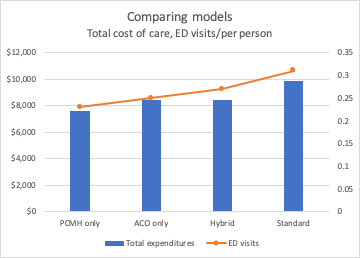
A new analysis finds that total healthcare costs and ED visits are significantly lower for adult patients of Patient-Centered Medical Homes (PCMHs) than for Accountable Care Organizations (ACOs), hybrids (both PCMHs and ACOs), or standard care (from facilities that are neither). PCMH patients had the lowest average total cost of care, 23% lower than standard…
Read More