Smart Savings
Response to OHS primary care capitation defense

Today, the CT Health Policy Project responded to a letter from the Office of Health Strategy regarding concerns from 25 independent consumer advocates, providers, and organizations. OHS’s response to our offer to work together to improve the health of every Connecticut resident is very welcome. In that spirit, the letter clarifies a few misunderstandings of…
Read MoreCTNJ op-ed: It’s a miracle — Under new agreement, Medicare will negotiate drug prices

Democrats in Washington have negotiated a deal to allow Medicare to negotiate prices with drug companies. Americans pay 2.56 times higher drug prices than residents of other developed countries. It has always been embarrassing that federal law prohibits Medicare drug price negotiation and the FDA can’t consider costs in drug approvals. The US is the…
Read MoreConnecticut hospital systems vary in reducing low-value care
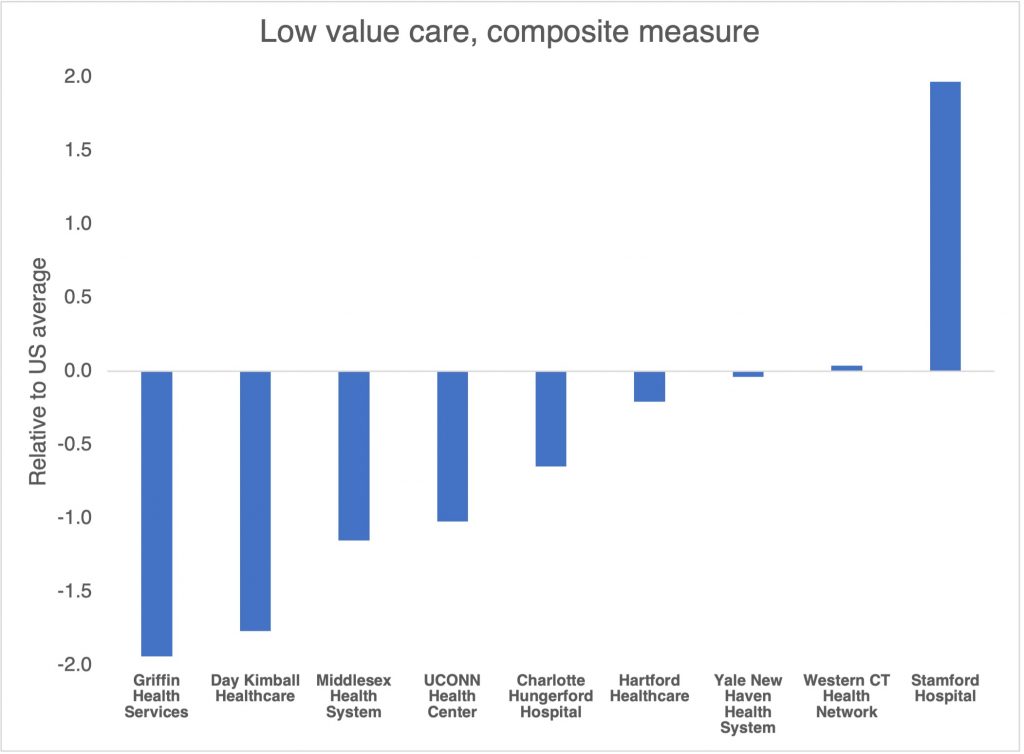
A new report published in JAMA Internal Medicine on low-value care provided to Medicare beneficiaries at the health system level offers actionable tools to improve effective care on the ground. Healthcare services that provide little or no health benefit, may harm patients, increase costs, and waste resources are low-value. Examples include prostate specific antigen testing…
Read MoreLegislative forum on drivers of rising health costs

Connecticut legislators will hear from experts on the drivers of rising health insurance premiums and options to control costs next Friday, September 24th at noon. The forum — Consolidation, Private Equity, and Drug Prices in Health Care Costs — is sponsored by Rep. Kerry Wood, Co-Chair of the Insurance and Real Estate Committee. The forum…
Read MoreCTNJ: Covered Connecticut is a good start, but needs tending

Policymakers were challenged this year to find an answer to voters’ demands for affordable healthcare coverage options. Both leading legislative proposals, a public health insurance option and restoring previous cuts to HUSKY parent coverage, had drawbacks and neither passed. The administration, together with the insurance industry, developed an alternative behind closed doors that did pass.…
Read MoreCovered Connecticut – Origins, Goals, Opportunities, and Concerns

Read the brief Covered Connecticut is a new program to cover uninsured state residents with no-cost health insurance coverage through Access Health CT, Connecticut’s health insurance exchange. The program leverages federal subsidies, some of which are temporary, and an anticipated Medicaid waiver to offer state residents combined with state funds. Some services, missing from exchange…
Read MoreCTNJ OP-ED | Congress Wants to Lower Drug Prices to Fund Important Priorities

Economists argue that rising healthcare costs crowd out resources for other societal priorities such as education, infrastructure, climate change, and housing. It makes sense in theory but, until lately, it seemed a bit abstract. But right now, Congress and the administration are making the point in very real terms. Policymakers want to make big investments…
Read MoreCT remains behind surrounding states in public health support
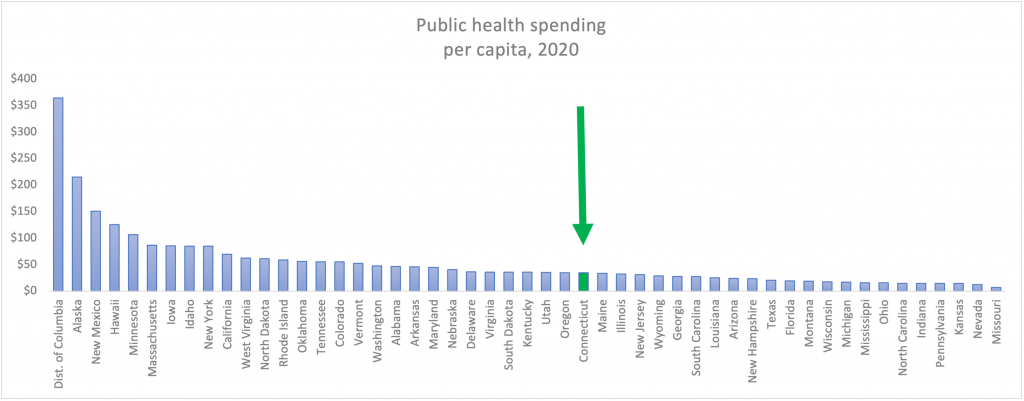
According to a new analysis by SHADAC, Connecticut remains behind our neighboring states in per person spending on public health. The pandemic has spotlighted the critical roles of public health including emergency preparedness, disease prevention, population health monitoring, and health promotion. Public health has been responsible for most of the increases in life expectancy in…
Read MoreCTNJ: CT needs to focus on real health reform
Connecticut insurance premiums were the sixth highest among states for both individual and family coverage in 2019. Making healthcare more affordable was the drumbeat from voters last year. But CT policymakers have responded with weak options that kick the can down the road. Controlling the drivers of health costs is advanced placement politics. Powerful industries…
Read MoreNew Medicaid homelessness prevention program shows promise

Starting August 1st, Medicaid members at risk of homelessness will have access to housing support services and subsidies through the new CHESS program. The program is designed to address upstream problems to prevent future problems and improve overall health. Described at today’s MAPOC meeting, the plan expects to serve about 850 Medicaid members with care…
Read More