
quality
Public comments critical of OHS’s Cost Cap plan
Several comments submitted on the Office of Health Strategy’s plan to cap healthcare costs during the public comment period raised serious concerns. The concerns echo those raised in previous unanswered letters signed by dozens of advocates. Comments were submitted by CT legal services programs, Gaye Hyre on behalf of the advocate letter writers, and one…
Read MoreYNHH and New Haven clinics open primary care center, despite transportation barriers and higher costs for patients and the state

On Monday, Yale New-Haven Health System with the Fairhaven and Cornell Scott Hill health centers announced the opening of their merged primary care clinic on Long Wharf. YNHH is closing their three neighborhood primary care clinics and moving healthcare for over 25,000 low income patients to the remote site. Community members find the transportation plans…
Read MoreAmericans are getting non-emergency care again, but progress varies
In good news, Americans are getting preventive and maintenance care visits, according to an analysis by the Commonwealth Fund. But progress is not even. While visits to dermatologists and for adult primary care are higher than before the pandemic, unfortunately behavioral health care visits and visits for young children have not rebounded. This is particularly…
Read MoreCommercial plans pay Connecticut hospitals 215% of Medicare prices, but that’s better than most states; No evidence of Medicaid or Medicare cost shifting
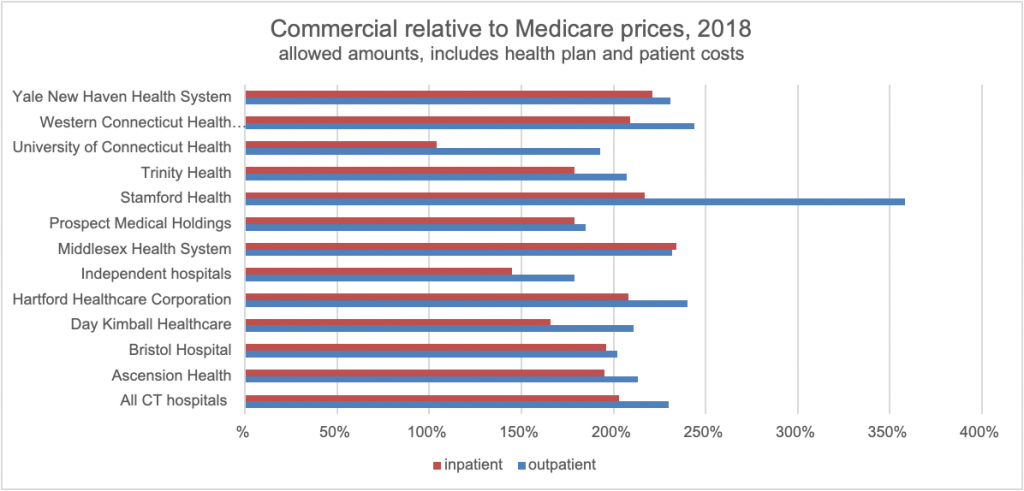
A new data set and report from RAND finds that Connecticut hospital prices paid by commercial plan were 215% of Medicare in 2018, varying from 144% for UConn Health to 282% for Stamford Health. If commercial plans had paid the same rates as Medicare that year, consumers would have saved $510 million. While high, Connecticut…
Read MoreCT ranks 5th among states in providing Long Term Services and Supports

Connecticut is improving Long-Term Services and Supports (LTSS) for older adults, people with physical disabilities, and their caregivers rising to fifth in performance among states, according to the latest State Scorecard. This is up from 10th, 12th, and 11th in previous reports from 2017, 2014, and 2011. Most states did not move much between report…
Read MoreOHS committee considers how to sell the Cost Cap to stakeholders
Last week’s meeting of the Office of Healthcare Strategy’s Cost Cap committee, as they are wrapping up the project design, ended with discussion of how to ensure their project is successful in controlling healthcare costs. Despite developing the Cap during a pandemic, there has been considerable resistance and mistrust of the concept and the process.…
Read MoreCT Mirror: The state should lower healthcare costs without risking our health

Opinion from Kathy Flaherty: As Executive Director of the CT Legal Rights Project, an advocate for people with disabilities, and someone who identifies as disabled, I take issue with “Flaws in CT’s healthcare system must be identified to be corrected” describing the Office of Health Strategy’s (OHS) plan to limit healthcare cost increases. . .…
Read MoreNational survey of healthcare executives finds population-based/capitated payment models are rare and aren’t growing

The latest survey of 500 US healthcare executives by the Numeroff & Associates finds that only 10% of revenue is at financial risk and that rate has not changed in the last three years. In previous surveys executives predicted that they would have a much larger share of revenue at financial risk by now. Just…
Read MoreCost cap committee excludes patients’ provider choices from primary care spending increase
On Thursday, the main committee convened by the Office of Health Strategy (OHS) met to continue their work to set a cap on how much healthcare costs can increase and, at the same time, double spending on primary care. At the meeting they codified a narrow definition of primary care provider for purposes of calculating…
Read MoreOne in three CT residents is anxious and/or depressed
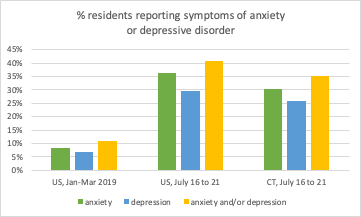
The good news is that the rate of Connecticut residents reporting symptoms of anxiety or depressive disorder is down some since the end of April, according to a new CDC survey. The bad news is that it’s three times higher than this time last year. The week of April 23rd, when Connecticut was deep into…
Read More