
HUSKY
Cost cap project sets limits on healthcare spending without public input, ignoring pandemic impact
In meetings of the committee setting limits on healthcare spending for all Connecticut residents, it appears the advocates’ sign on letter and detailed concerns about the Office of Health Strategy’s (OHS’s) Cost Cap project were not heard. The plan is being developed by a Technical Advisory Team, with members chosen only by OHS, including some…
Read MoreOHS committee chooses unrealistic cap for CT healthcare costs

The Office of Health Strategy’s (OHS) Technical Team choosing the cap for future Connecticut healthcare costs has decided on a 3.1% allowed increase for next year, dropping over time to 2.7% by 2025. To illustrate the impact of the cost cap, consider the significant variability in Connecticut’s per capita all-payer total healthcare cost increases from…
Read MoreSurprisingly, Medicaid applications are down sharply with the pandemic
At Friday’s MAPOC meeting, DSS reported that HUSKY applications were down 40% in May from a year before. This was unexpected given massive increases in unemployment and predictions of over 100,000 new Connecticut Medicaid members because of the pandemic. In January, February and March, applications ran 15% to 20% higher than last year. But a…
Read MoreHelp for CT’s uninsured

With the recent spike in unemployment, many more Connecticut residents will be joining the thousands that were uninsured pre-COVID looking for healthcare coverage. The state has some new options to help. Check AccessHealthCT. You may be surprised to find that you qualify for HUSKY which is comprehensive, free, and includes most Connecticut providers. You may…
Read MoreCost Cap project could reduce access to care, stifle efficiency and innovation, and increase disparities

Download the Summary or Full Report Healthcare costs a lot in Connecticut, especially for middle and lower income residents. Primary care is the foundation of a healthy health system. Lowering costs and supporting primary care are important goals, however the Office of Health Strategy’s (OHS) new plan to limit costs is ill-conceived and likely to…
Read MoreAdvocates, providers send Governor, legislators letter about cost cap impact and unintended consequences

Yesterday, twenty advocates and providers sent letters to the Governor and legislative leaders objecting to the rush to develop a cap on healthcare cost increases during a pandemic, and to use the time to incorporate input from diverse stakeholders and for thoughtful design with a broad group chosen democratically. “This controversial proposal, if rushed ahead…
Read MoreCT hospitals would fare better than most if all payers used Medicare payment rates

A new study published in Health Affairs finds that if commercial payment rates were set at fee-for-service Medicare levels in 2017, US hospital revenue (inpatient and outpatient) would drop by 35%. Interestingly, also raising Medicaid rates to Medicare levels does little to mitigate that, changing the revenue loss to 30%. However, the authors note that…
Read MoreProtecting affordability in a pandemic — Experts find fair prices for remdesivir between $10 and $4,500

In a nation hungry for good news in fighting the COVID-19 pandemic, remdesivir has emerged as a first ray of hope. The FDA has quickly approved the drug for emergency use with seriously ill patients. However there are concerns that the data supporting remdesivir’s effectiveness has not been published or peer reviewed by independent scientists…
Read MoreCTNJ: Forecast Estimates More Than 100,000 New CT Medicaid Members
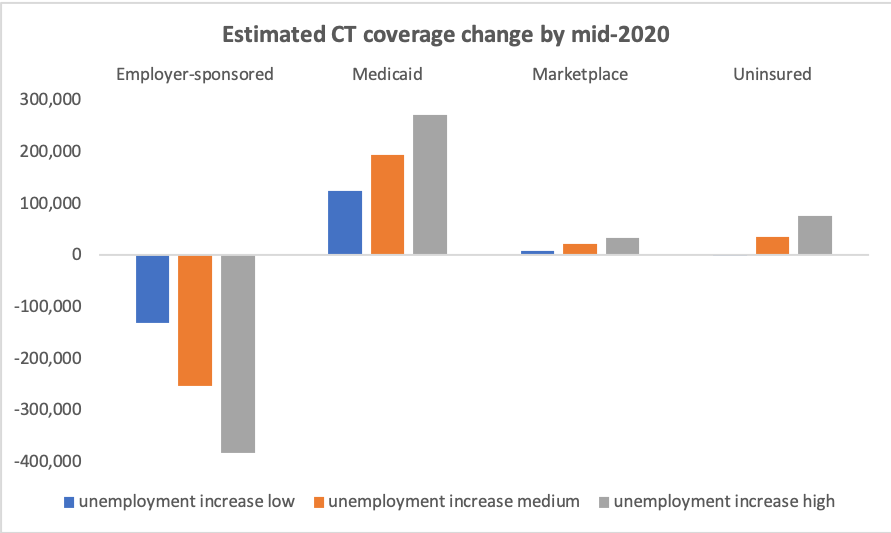
According to modeling by Health Management Associates, the COVID-19 pandemic could raise Connecticut’s Medicaid rolls 15% to 32% by mid-2020, depending on how much unemployment grows. Connecticut residents with employer-sponsored coverage could drop by 130,000 to 382,000 and Access Health CT coverage could grow by 8,000 to 33,000. Uninsured could rise by 77,000. Read more
Read MoreCTNJ: Analysis — Will COVID-19 Make Health Insurance Premiums Skyrocket?

Not necessarily. COVID-19 could cost the US between $34 billion and $251 billion for testing, treatment and care. Some analysts have predicted that premiums will rise between 4% and 40% next year because of the pandemic. Because consumers, taxpayers and workers ultimately pay the bills, from our taxes, our lost wages, our premiums, and directly…
Read More