
healthcare costs
Has MA’s cost cap worked? Should CT copy it?

Download the report The latest reports (here and here) on Massachusetts’s first-in-the-nation cost cap project raise questions about whether it has worked. Since the cap was implemented in 2013, consumer costs are growing faster than overall healthcare, inflation, or incomes. Despite almost eight years under their cost cap, Massachusetts’s out-of-pocket costs and premiums have grown…
Read MoreCTNJ Op-Ed: Labels matter in healthcare, especially the misleading ones

The President was right – healthcare is complicated. There are lots of reasons, but a big one is language. What something is called can add to or lessen understanding. Sometimes it can be deceptive, giving the impression of a more acceptable definition than the truth. It rarely works for long, but a lot of harm…
Read MoreCT hospital uncompensated care below US average, varies between hospitals, no relation to profits

Read the report According to the state’s latest report, Connecticut hospitals provided totaled $806 million in uncompensated care last year, up 5.3% from 2018. Uncompensated care is the total of charity care, provided to needy patients that hospitals never expected to be reimbursed, plus bad debt, care provided that patients couldn’t or wouldn’t pay for.…
Read MorePublic comments critical of OHS’s Cost Cap plan
Several comments submitted on the Office of Health Strategy’s plan to cap healthcare costs during the public comment period raised serious concerns. The concerns echo those raised in previous unanswered letters signed by dozens of advocates. Comments were submitted by CT legal services programs, Gaye Hyre on behalf of the advocate letter writers, and one…
Read MoreYNHH and New Haven clinics open primary care center, despite transportation barriers and higher costs for patients and the state

On Monday, Yale New-Haven Health System with the Fairhaven and Cornell Scott Hill health centers announced the opening of their merged primary care clinic on Long Wharf. YNHH is closing their three neighborhood primary care clinics and moving healthcare for over 25,000 low income patients to the remote site. Community members find the transportation plans…
Read MoreCTNJ candidate questionnaire now online

Candidates’ answers to CT News Junkie’s questionnaire about policy issues facing Connecticut is now online. Several questions relate to healthcare. Inform your vote by checking out your candidates’ answers. Health questions for candidates: What should Connecticut do to re-tool our public health for COVID-19 and the possibility of future pandemics, while also addressing other chronic…
Read MoreMedian income CT residents squeezed between rising insurance premiums and inadequate subsidies

A new CMS analysis finds that between 2015 and 2019, US insurance premiums rose while enrollment in insurance exchanges went down. The report found that 85% of the drop in enrollment was in unsubsidized coverage. People with incomes below 400% of the federal poverty level ($51,040 for an individual, $86,880 for a family of three)…
Read MoreUS safe injection sites could save lives and save cities up to $4.35 million each year

Allowing safe sites for injecting opioids in the US would save lives and lower healthcare spending significantly for affected communities, according to ICER’s latest draft evidence report. In 2018, opioid overdoses killed 948 Connecticut residents and there are signals that the rate has risen during the pandemic. Supervised injection facilities (SFIs) are part of a…
Read MoreCommercial plans pay Connecticut hospitals 215% of Medicare prices, but that’s better than most states; No evidence of Medicaid or Medicare cost shifting
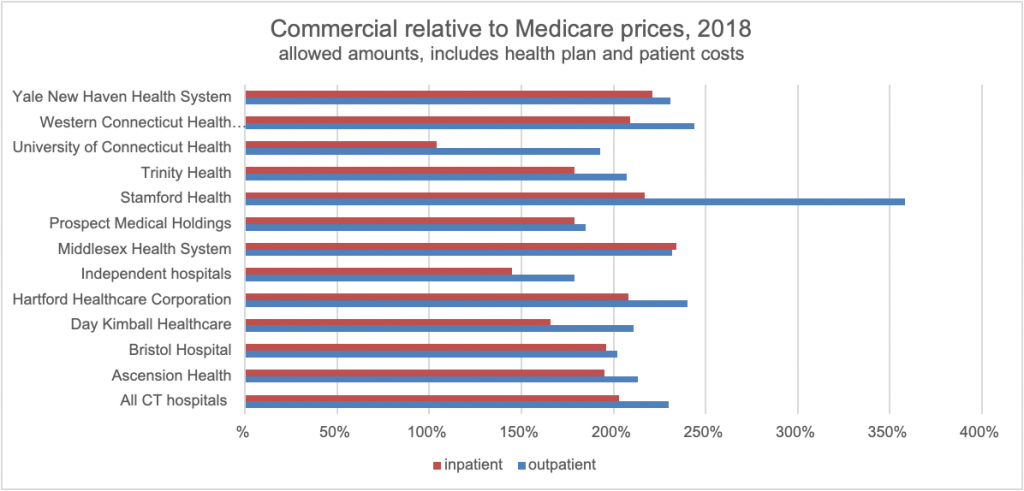
A new data set and report from RAND finds that Connecticut hospital prices paid by commercial plan were 215% of Medicare in 2018, varying from 144% for UConn Health to 282% for Stamford Health. If commercial plans had paid the same rates as Medicare that year, consumers would have saved $510 million. While high, Connecticut…
Read MoreCT ranks 5th among states in providing Long Term Services and Supports

Connecticut is improving Long-Term Services and Supports (LTSS) for older adults, people with physical disabilities, and their caregivers rising to fifth in performance among states, according to the latest State Scorecard. This is up from 10th, 12th, and 11th in previous reports from 2017, 2014, and 2011. Most states did not move much between report…
Read More