
Health Reform
CTNJ: CT’s uninsured rate is down and stable, so who’s still uninsured?

According to the latest numbers from the US Census, 187,000 Connecticut residents or one in twenty of us, were uninsured last year. That’s both good and bad news. Read more
Read MoreCT Medicaid child checkup rates jumped when HMOs were fired
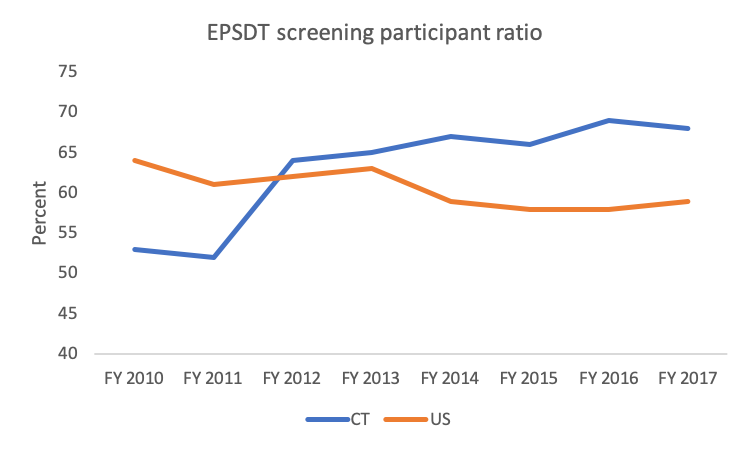
Well-child screenings increased twelve percent for HUSKY children between FY 2001 and FY 2012, according to a new report from the Government Accounting Office. While correlation is not causation, it is important to note that on January 1, 2012 Connecticut Medicaid payment shifted from capitation through private managed care companies to our current managed fee-for-service…
Read MoreCTNJ: CT Medicaid is making the same mistake, again
Despite warnings, the state is about to make a big mistake, again. DSS is planning to renew PCMH Plus, their risky Medicaid experiment that has cost the state more and done nothing to improve care, jeopardizing hard-earned progress. Two years ago, when the state wanted to expand PCMH Plus the first time, advocates raised alarms…
Read MoreCT Health Policy Project’s 20th Anniversary: Progress, but lots of challenges ahead

Read the report Since 1999, when the CT Health Policy Project was founded, Connecticut’s healthcare landscape has changed in both predictable and unpredictable ways. Costs are rising faster than our economy is growing, and those costs are falling disproportionately on consumers. Experts are predicting another recession and it’s unclear if Connecticut’s healthcare landscape is ready.…
Read MoreCTNJ: A recession is coming and it could hit Connecticut healthcare hard
While President Trump disagrees, a recent survey found that three in four economists expect the US economy to enter a recession by 2021. Recessions are a natural part of the economic cycle – it’s not a question of whether it will happen, but when. The last recession, in 2008, hit Connecticut especially hard, and in…
Read MoreProposed federal rule would require hospitals to post negotiated rates

A new proposed federal regulation (called a “rule”) would allow consumers to compare negotiated service prices by hospital and by payer. These would be the real prices paid by insurers, both hospital and payer-specific prices, as well as gross prices. This information could be extremely helpful for consumers without insurance and those with high deductibles…
Read MoreACA @10: Conference on the Affordable Care Act’s status and future

Join leaders who helped pass and implement the Affordable Care Act, September 26th and 27th at the Yale Law School for The ACA at Ten, a conference to reflect on the Affordable Care Act. Speakers include Rahm Emanuel, Kathleen Sebelius, and 22 other scholars and policymakers. Speakers will examine the ACA’s successes, shortcomings, and future.…
Read MoreCoincidence? CT spends little on primary care, and we have high ED, preventable hospitalization rates

A new analysis finds that Connecticut, at only 3.5% of our health care dollars spent on primary care, is last among 29 states studied. Not surprisingly, we also rank among the highest in ED visits, all hospitalizations, and in avoidable hospitalizations. The US average is 5.6% of health care spending devoted to primary care, well…
Read MoreLarge study finds selection bias in Medicare shared savings erases savings and quality improvements – advocates saw this coming

Researchers from the University of Michigan found that the modest savings and quality improvements reported by Medicare’s extensive shared savings program (MSSP) are likely due to adverse selection. High cost clinicians and beneficiaries were far more likely than others to exit the program. When adjusted for the selective bias in MSSP exit, reported savings and…
Read MoreAdvocates offer recommendations for Medicaid shared savings future

The first year of Connecticut Medicaid’s PCMH Plus experiment in shared savings was disappointing. The program cost the state at least $1.3 million extra tax dollars and quality did not improve compared to Medicaid members outside the program. Every Accountable Care Organization (ACO), regardless of savings or quality improvement, was rewarded with a payment. The…
Read More