
drugs
Op-Ed: This Is Why CT Can’t Lower Healthcare Costs

After years of deliberation, Connecticut’s state plan to cap healthcare costs has finally identified the drivers of those costs in our state. But the Steering Committee, dominated by healthcare industries, still isn’t brave enough hold the overspenders accountable. They want the profitable industries to come up with ideas to lower their own costs (what could…
Read MoreNew standards to include health equity lens in effectiveness, fair pricing analyses

There is a growing consensus that healthcare systems can, unintentionally, exacerbate health disparities for underserved communities. There is a special concern that, as more payers use health technology assessments (HTAs) to promote value in the healthcare system, that health equity be incorporated into the methods. HTAs are evidence-based evaluations of healthcare treatments for clinical effectiveness…
Read MoreData brokers are offering sensitive mental health info for cheap

As the need for mental health care grows and capacity tightens, patients are turning to telehealth and apps. Hispanics are especially likely to use healthcare apps which are not covered by privacy laws. Researchers found data brokers advertising easy access to very sensitive information for as little as $275. Brokers “advertised highly sensitive mental health…
Read MoreOp-Ed: Things to like in the Governor’s budget proposal
This is new for me and I may be alone, but I found a lot to like in the Governor’s budget. This fall the administration must have been listening to complaints about their disappointing healthcare record. Their new budget proposal starts to turn that around, tackling the drivers of soaring healthcare costs – prices for…
Read MoreAnalysis: Life Saving Innovation at Alarming Prices
We do scientific innovation very well. New therapies — from anesthesia in 1850, antibiotics in 1928, organ transplants in 1960, to COVID vaccines now — are improving our lives and extending life expectancy. However, healthcare costs now consume 20% of our economy, and we aren’t getting our money’s worth. Complicating the issue, Pharma’s extreme drug…
Read MoreBarriers to Fair Access Report prompts insurers to improve access to 11 drugs

There’s a lot of very appropriate focus on the unfairness of unwarranted drug prices. But an equally important key to patients accessing those drugs is the fairness of insurance policies. To keep premiums affordable, insurers must balance, even encourage, appropriate to access care, while deterring overtreatment and excessive prices. ICER, the nation’s leading value assessment…
Read MoreCTNJ op-ed: Health insurance affordability review is good, but it’s no silver bullet
A movement to include affordability in the Insurance Department’s review of health insurance premiums is gaining champions. That’s a good thing. The best care is useless if you can’t afford it. Holding insurers accountable for lowering costs is important, but it’s not going to solve everything. We need to do much more to get costs…
Read MoreNo evidence to justify increases for 7 of top 10 most costly drugs

The latest Unsupported Price Increase report from the Institute for Clinical and Economic Review finds that, last year, seven of the ten most costly drugs in the US that raised net prices well over the rate of general inflation, had no new clinical evidence of effectiveness to justify the increases. The increases on just these…
Read MoreMental health workforce swamped by need, what needs to happen

A few recent reports have raised alarms about whether our healthy system’s mental health capacity can meet the need, and what we can do about it. The need is great. A mid-September Household Pulse Census survey found that 361,729 Connecticut residents reported feeling anxiety nearly every day and 219,164 reported depressive thoughts nearly every day.…
Read MoreStudy finds Americans living in liberal states, like CT, live longer but we can do better
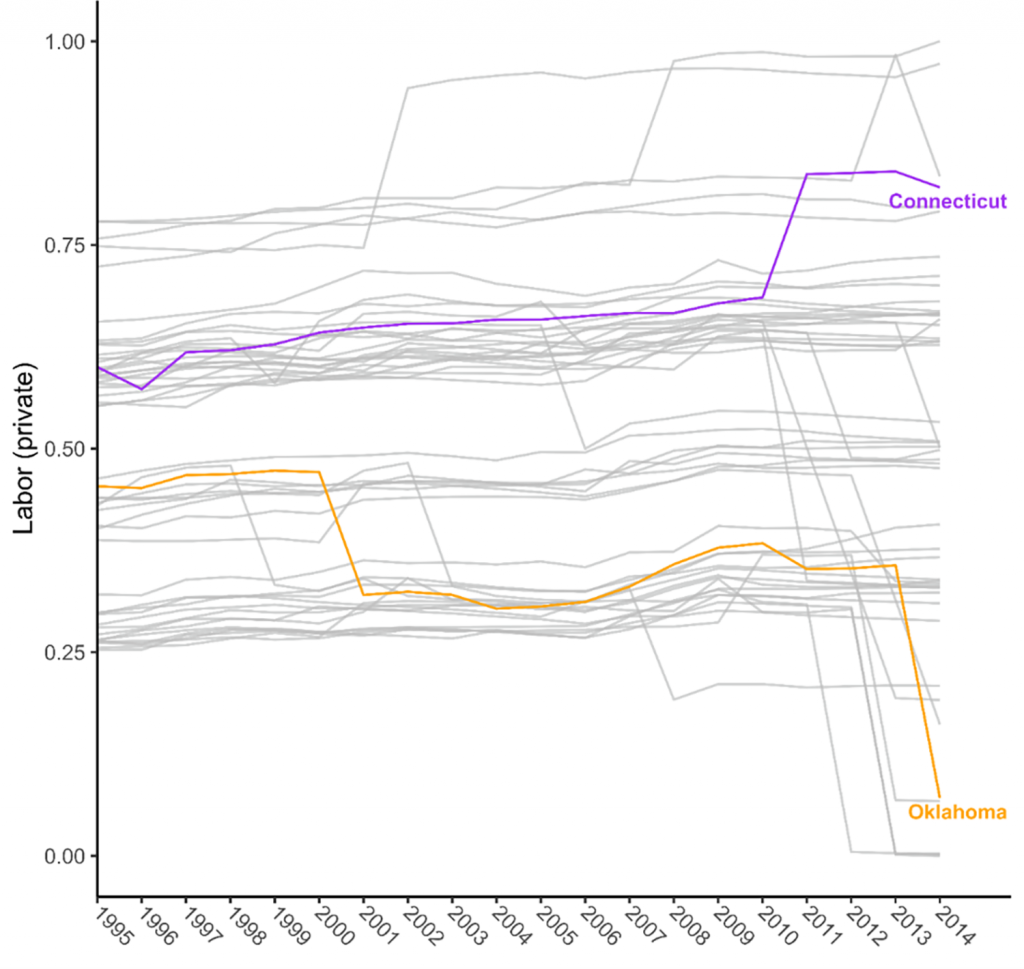
Recently, working-age Americans’ mortality has reversed its historic declines, largely due to lack of progress on heart disease, and rising deaths due to alcohol, suicide, and drug poisoning. A new study finds that from 1999 to 2019, mortality for adults ages 25-64 was lower in states with liberal policies, like Connecticut, and worse in conservative…
Read More