
drugs
CTNJ op-ed: Governor’s plan to lower healthcare costs — what’s in and what’s missing

It’s an election year and voters want relief with healthcare costs and insurance premiums. Governor Lamont has proposed a slate of bills to address the problem. He has a good proposal to limit drug price increases, an unnecessary proposal to draft yet another report on what’s driving up costs, and a bad one to divert…
Read MoreICER report on fair access to drugs prompts six insurers to change coverage policies

A powerful new scorecard from the Institute for Clinical and Economic Review (ICER) assessing 15 of the largest US formularies for barriers to accessing 28 fairly-priced drugs found generally good policies for clinical standards (96% are fair), step therapy (99%), and prescriber restrictions (100%). However, the report found poor policies for cost sharing tiers (77%)…
Read MoreLast year unjustified price increases for nine drugs cost US healthcare $1.67 billion, Humira accounted for $1.4 billion

According to this year’s report, last year the US health system spent an extra $1.67 billion on price increases for nine drugs that were not supported by clinical evidence. Humira led this year’s list at $1.4 billion, accounting for 84% of US unjustified drug price increases in 2020. Humira aside, the more modest price increases…
Read MoreCTNJ op-ed: It’s a miracle — Under new agreement, Medicare will negotiate drug prices
Democrats in Washington have negotiated a deal to allow Medicare to negotiate prices with drug companies. Americans pay 2.56 times higher drug prices than residents of other developed countries. It has always been embarrassing that federal law prohibits Medicare drug price negotiation and the FDA can’t consider costs in drug approvals. The US is the…
Read MoreNew Cost Cap Steering Committee is industry-driven
The first meeting of the new Steering Committee to guide the Office of Health Strategy’s (OHS) plan to cap healthcare cost growth was uncharacteristically quiet. The meeting started with public comment from the Universal Healthcare Foundation of CT that the committee membership is “not balanced”, includes mainly members with “deep vested business interests”, and lacks…
Read MoreCT ranks 15th among states in healthcare affordability, but that’s not saying much

Connecticut has implemented many policies to make healthcare affordable; unfortunately, they aren’t working. According to Altarum’s new Healthcare Affordability State Policy Scorecard, Connecticut earned 43.1 out of 80 possible points. There is a lot of room for improvement. Altarum ranked states on adoption of policies that can impact affordability and on outcomes, whether care is…
Read MoreConnecticut hospital systems vary in reducing low-value care
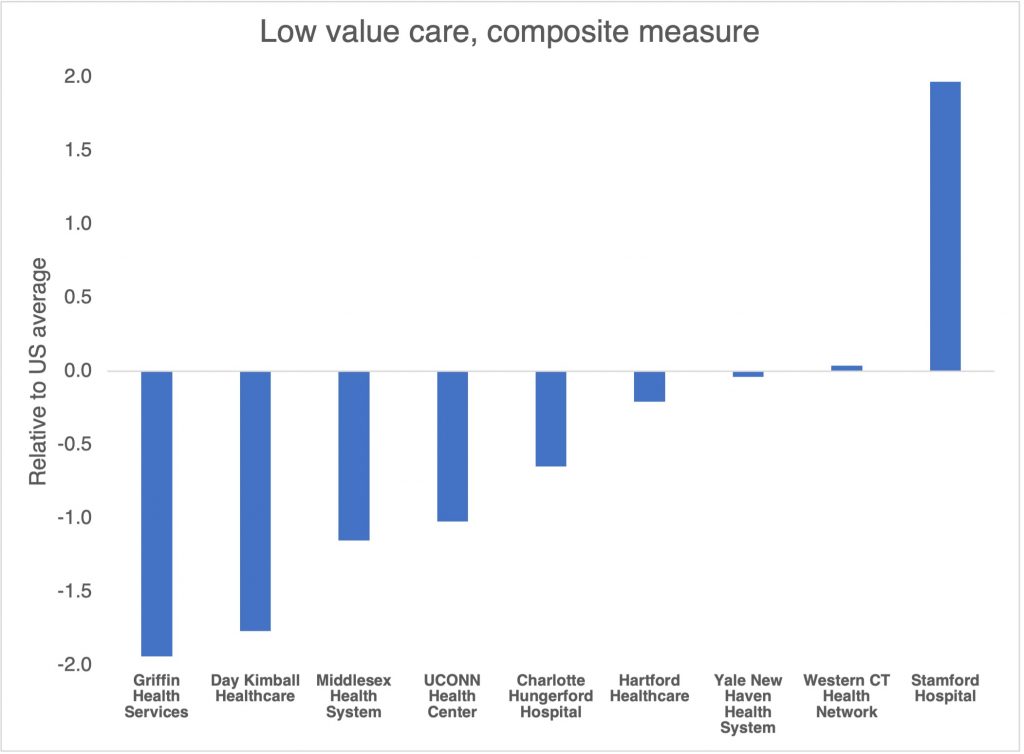
A new report published in JAMA Internal Medicine on low-value care provided to Medicare beneficiaries at the health system level offers actionable tools to improve effective care on the ground. Healthcare services that provide little or no health benefit, may harm patients, increase costs, and waste resources are low-value. Examples include prostate specific antigen testing…
Read MoreCTNJ: OP-ED | Legislators Hear How RI Saved 2 Hospitals From Private Equity, Other Solutions to High Insurance Premiums
On Friday, in a forum sponsored by state Rep. Kerry Wood, six national and local experts gave legislators specific policy tools to help with health care market consolidation and rising drug prices that are driving up health insurance premiums. Legislators also got specific tools used by Rhode Island to avoid private equity abuses experienced in…
Read MoreCT residents over twice as likely to die of opioid or other drug poisoning than from alcohol
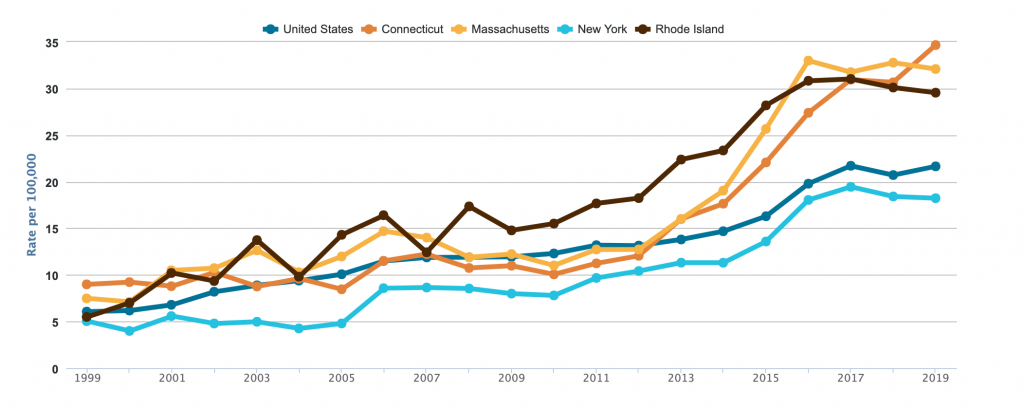
Connecticut ranked 17th lowest among states in alcohol-related deaths per capita, but seventh highest in opioid-related deaths in 2019, based on an analysis of data from SHADAC’s State Health Access Data Assistance Center. That year, Connecticut residents were 245% more likely to die from an opioid or other drug poisoning than from alcohol. (Opioid or…
Read MoreLegislative forum on drivers of rising health costs

Connecticut legislators will hear from experts on the drivers of rising health insurance premiums and options to control costs next Friday, September 24th at noon. The forum — Consolidation, Private Equity, and Drug Prices in Health Care Costs — is sponsored by Rep. Kerry Wood, Co-Chair of the Insurance and Real Estate Committee. The forum…
Read More