Risk to CT hospitals from Medicaid cuts varies significantly

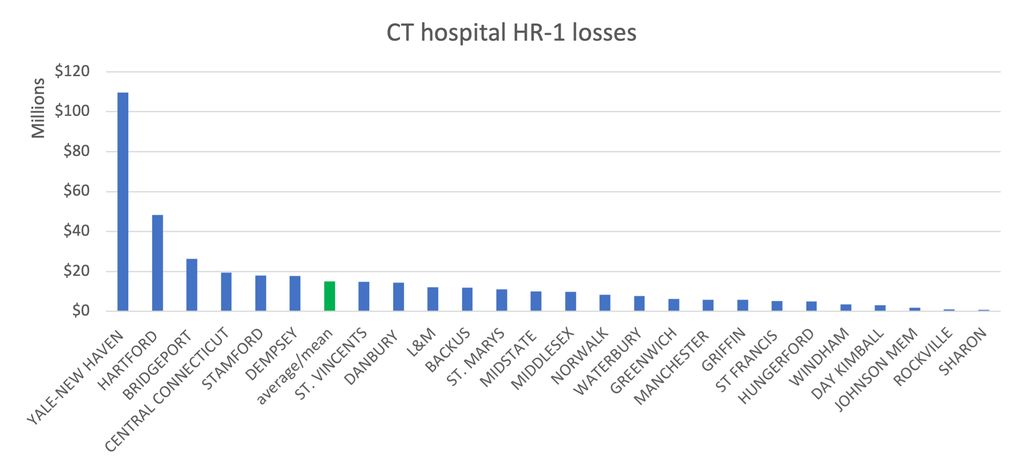
The federal budget bill, HR-1, will cause significant cuts across Connecticut’s healthcare landscape. Much of the cuts will fall on hospitals, but the burden will not be shared equally.
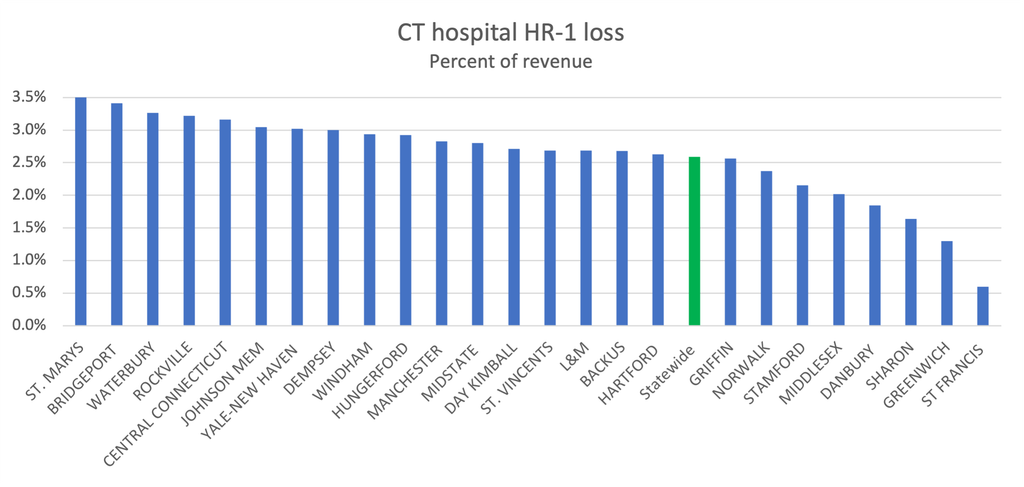
A new analysis by Third Way estimates that statewide, Connecticut hospitals will lose $378 million annually over the next ten years due to federal Medicaid cuts. While that’s a big number, it is 2.6% of revenue. In general, hospitals that rely more heavily on Medicaid revenue and already have higher uncompensated care costs will be hit harder, while others are largely spared.
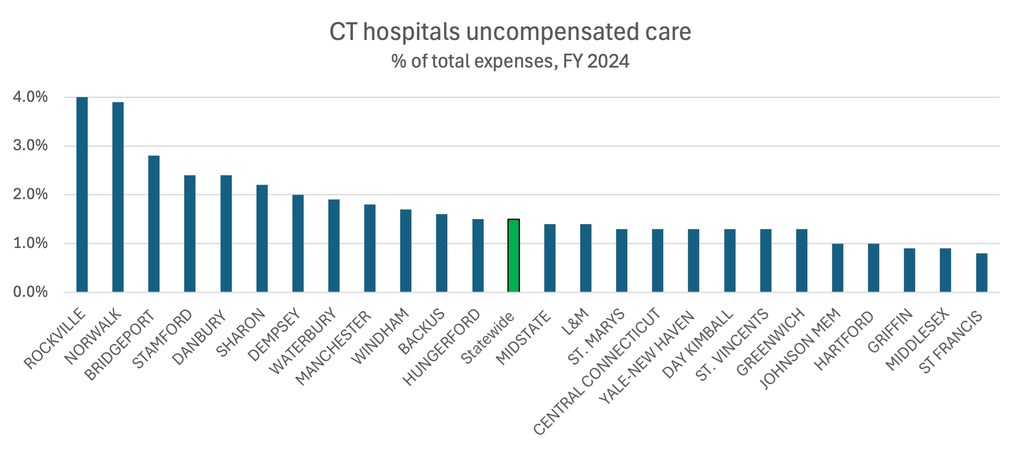
But it’s not a direct correlation. Bridgeport Hospital is in the top three Connecticut hospitals for all four categories — both total dollars and percent of revenue lost to federal cuts, Medicaid’s percent of gross revenue, and uncompensated care as a percent of expenses. On the other hand, Sharon Hospital is in the bottom three among state hospitals in both total dollars and percent of revenue lost to federal cuts and Medicaid’s percent of gross revenue. However, in 2024 Sharon was seventh highest in uncompensated care burden, suggesting an already high un/under-insured burden.
At $109 million annual loss, Yale-New Haven takes the biggest hit by far. While Sharon Hospital will lose $26 million each year. But as a percentage of total revenue, St. Mary’s will be hit hardest at 3.5%. While surprisingly, St. Francis will lose just 0.6% of revenue annually.
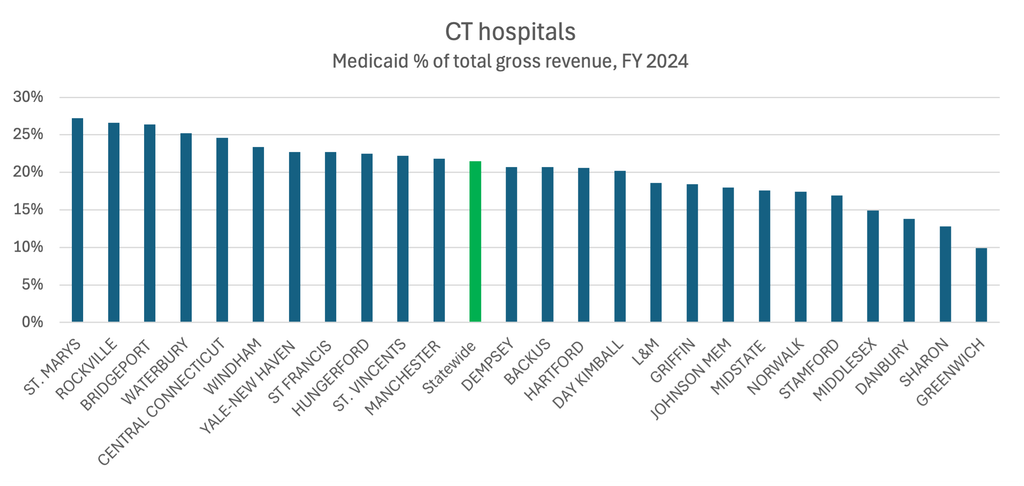
In 2024, St. Mary’s led Connecticut hospitals with Medicaid accounting for 27.2% of total revenue, according to the state Office of Health Strategy, so it’s not surprising that they will take a big hit. In contrast but not surprisingly given geographic location, Greenwich Hospital relied the least on Medicaid funding at 9.9%.
As the Medicaid cuts mainly result from state residents losing coverage due to work requirements, many current hospital patients will become uninsured. Those same low-income patients will continue to rely on their local hospitals for care but are unlikely to be able to pay their bills. So, it’s important to consider which hospitals already bear a disproportionate share of the state’s uncompensated care burden. In 2024, Rockville and Norwalk hospitals, at 4.0% and 3.9% respectively, had the highest uncompensated care costs as a share of total costs. Surprisingly again, St. Francis had the lowest rate at 0.8% of expenses.
Note that Bristol and CT Children’s hospitals were not included in Third Way’s analysis.