HUSKY changes coming -- Caregivers keep your coverage
The 2025 federal budget bill, HR-1, made important changes to Medicaid, affecting Connecticut’s HUSKY program. Starting this January, all HUSKY Part D members must be working, going to school, in job training, or volunteering in their community to keep their healthcare coverage. Under HR-1, HUSKY Part D members must also renew their HUSKY with DSS every six months, instead of each year. Only HUSKY Part D adults ages 19 to 64 are affected by the new requirement.
There are several exemptions to the work requirement, including people caring for someone with serious health problems.
The state is working hard to ensure that every eligible HUSKY member keeps their coverage. DSS will try to verify that members meet the requirement with the information they already have available. If they need documentation, they will contact members to let them know what to provide. The details on the work requirement process are still being worked out.
Impact on caregivers
Family or friends providing regular care for people with health needs, including people with disabilities and seniors, don’t have to comply with the Medicaid work requirements. But many may never know that they are exempt and could lose their HUSKY coverage.
AARP estimates that 60,000 people in Connecticut with incomes below $25,000 per year are providing critical care for family or friends. Many are likely to be covered by HUSKY Part D and at risk of losing their healthcare coverage.
Caregivers provide critical care we could never afford to pay for. This care allows people with health needs to stay in their homes, avoiding costly hospital and institutional care.
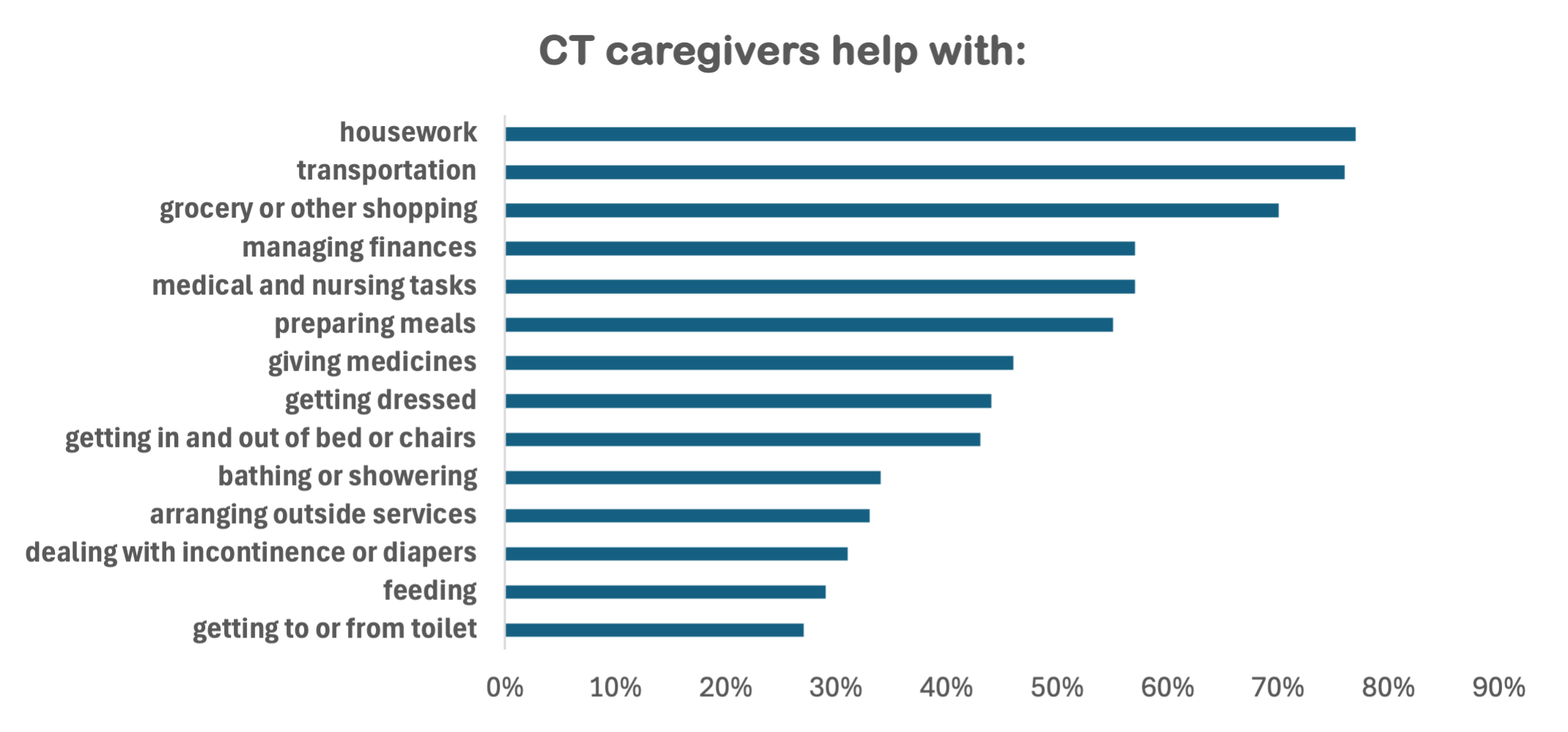
Source: Caregiving in the US 2025: Connecticut, October 2025, AARP
One in five Connecticut caregivers struggle to care for their own health. Medicaid is critical to staying healthy for themselves and the people they care for. Almost half struggle with finances due to their caregiving responsibilities and couldn’t afford health insurance if they lose HUSKY.
To keep HUSKY, Connecticut caregivers will have to document their exemption with the state. As of this writing, the system to document exemptions has not been finalized.
There is no data source to help the state find caregivers in Connecticut. It’s critical that all of us let caregivers, healthcare providers, and communities know about this exemption.
More information
Flyers for caregivers -- English and Spanish
Fact sheet – to share online or to print (with QR codes)
HUSKY and Caregivers - Talking points
HUSKY and Work Requirements – How to Make it Work, CT Health Policy Project
HUSKY Part D members by town -- alphabetical or sorted by number
To track developments about how HR-1 is affecting Connecticut, follow the legislative Council on Medical Assistance Oversight and its Care Management Committee meetings.
For consumer info from DSS, go to MedicaidMattersCT.org
Get Involved
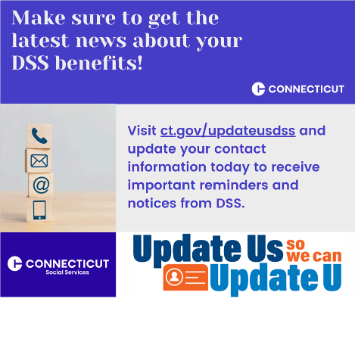 |
All HUSKY members should update their contact information with DSS to be sure they know what is happening and what they have to do to keep coverage. |
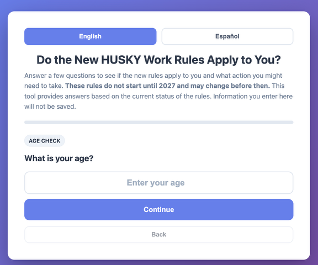 |
Members can also determine if the work requirement applies to them at ct.gov/HUSKYDhelp. |
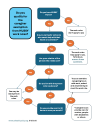 |
A flowchart to determine who qualifies for the caregiver exemption |
Get updates from the CT Health Policy Project
Many thanks to Tisa Biswas, Alannah Doheny, and Emily Martinez-Clark for essential contributions to the project.